La Specialista Opera Delonghi Espresso Machine – Semi Automatic Espresso Machine with Grinder & Cold Brew Coffee Machine by Delonghi

Start at $899
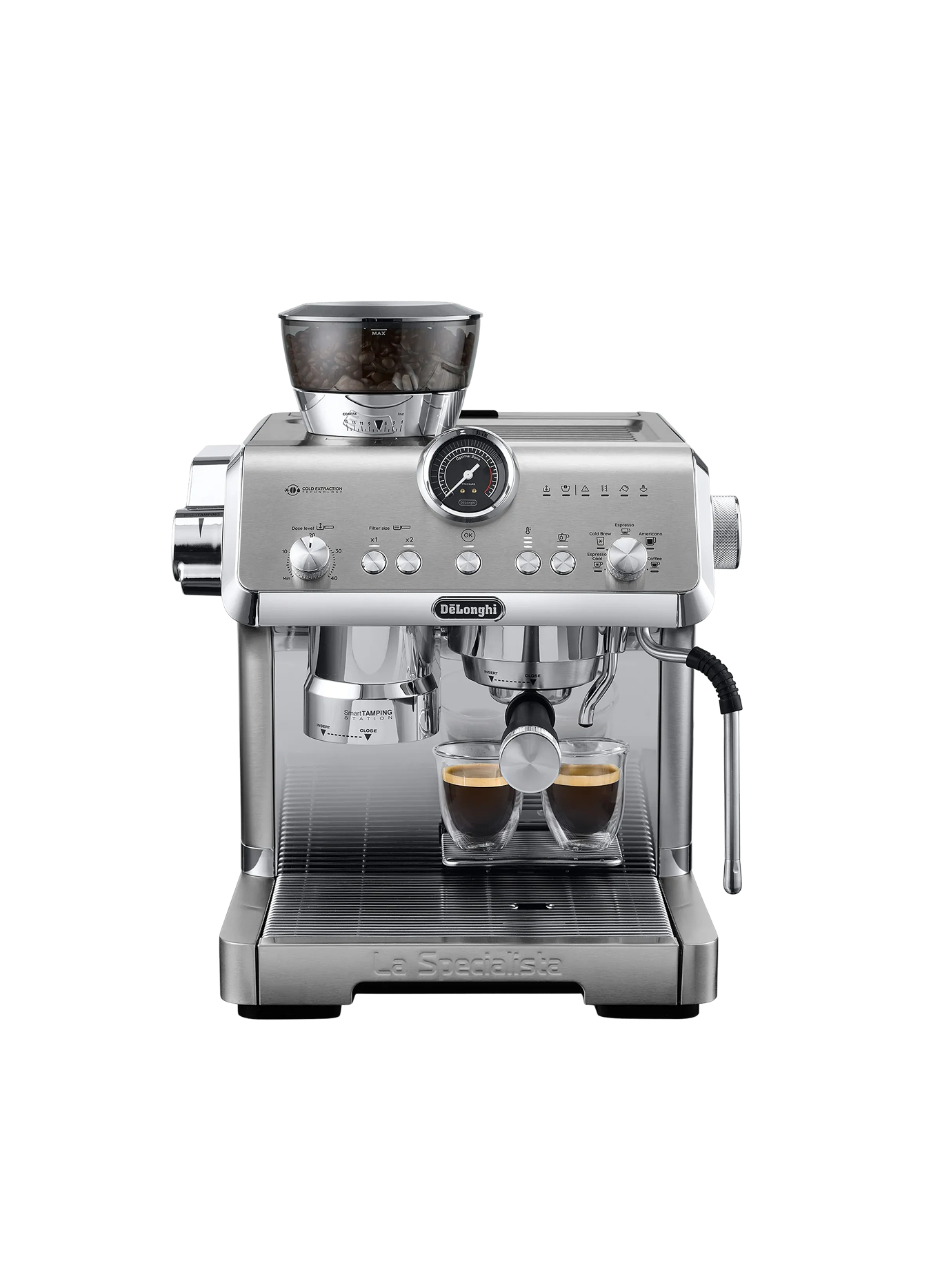
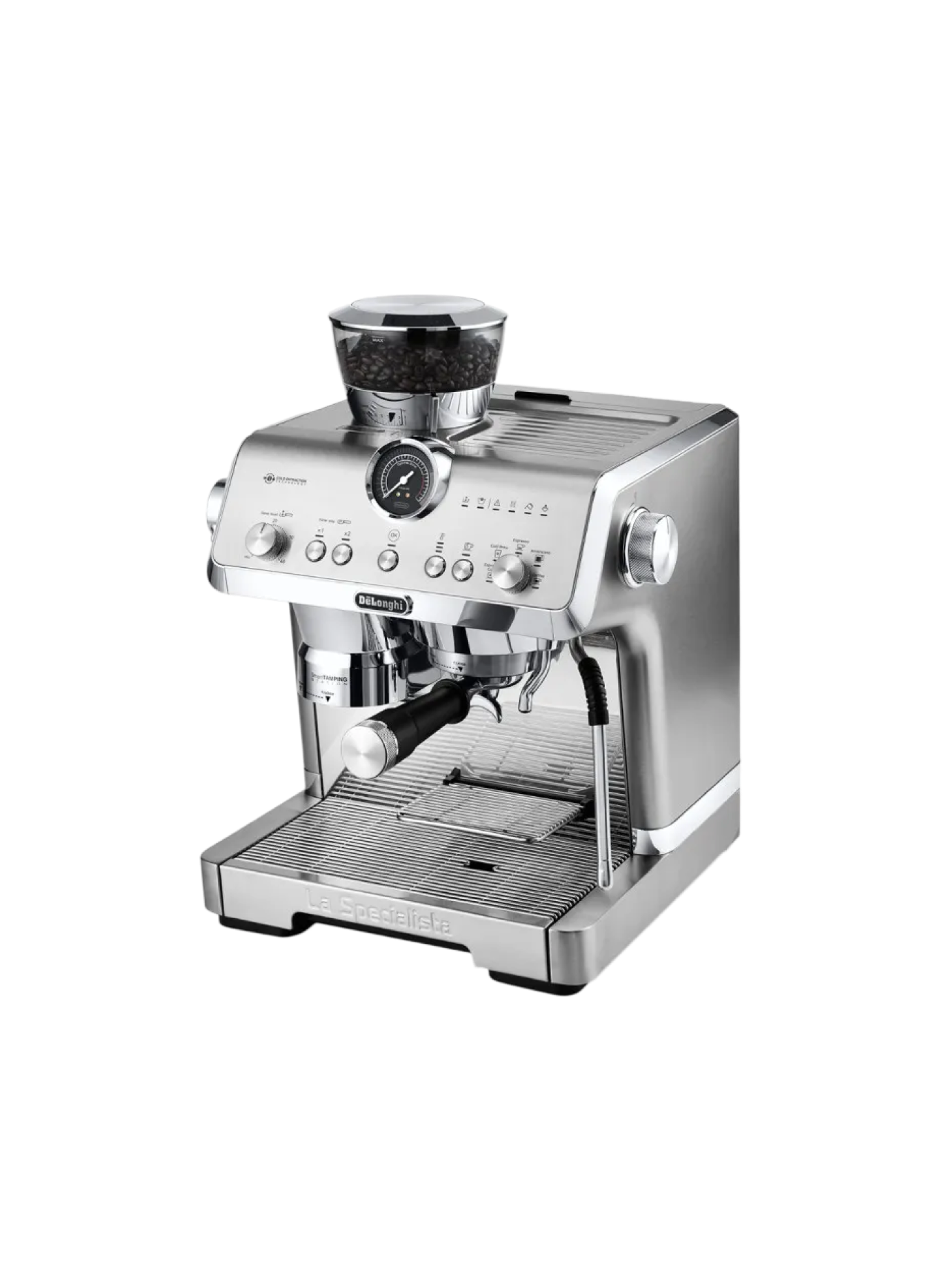
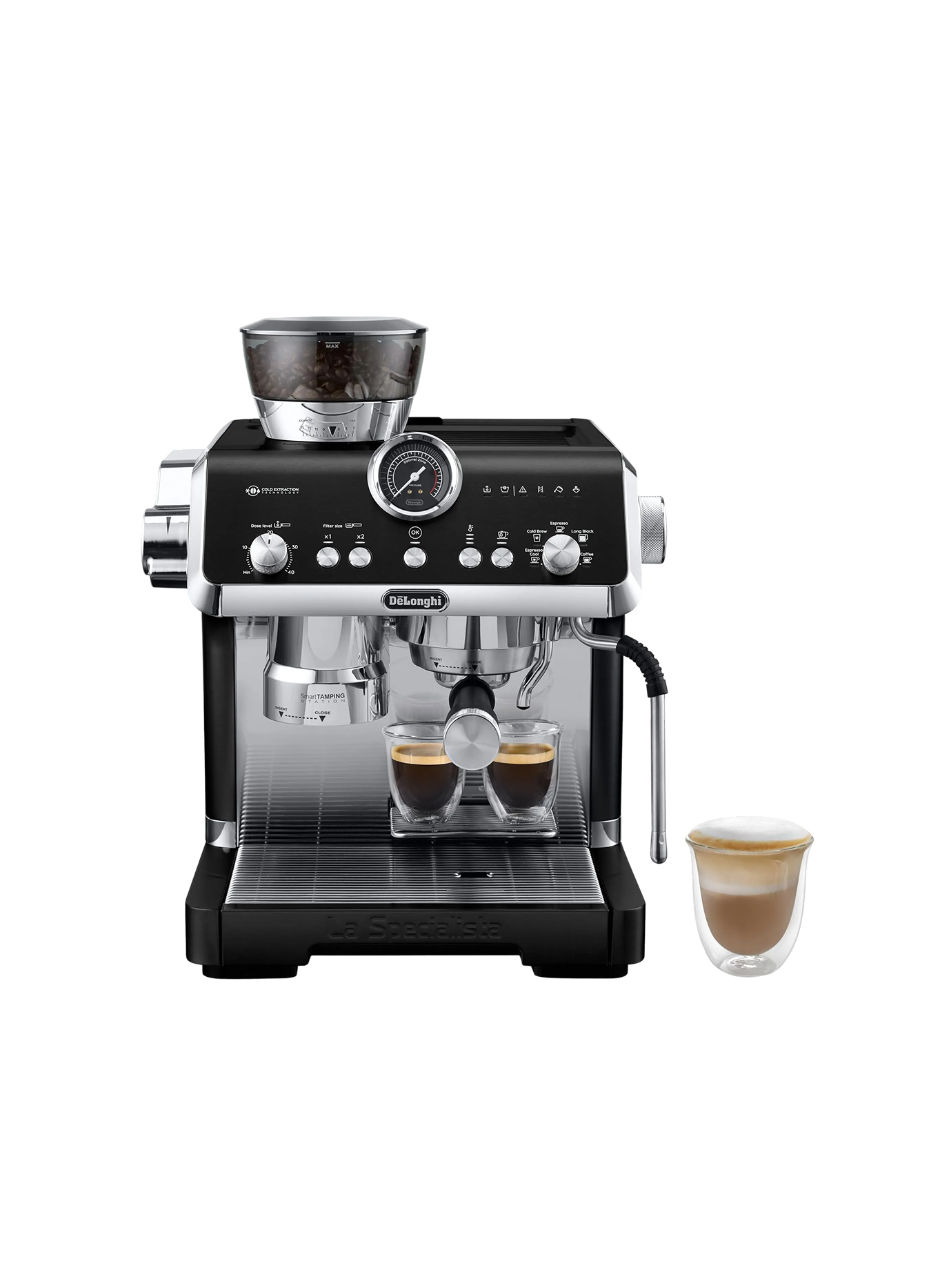
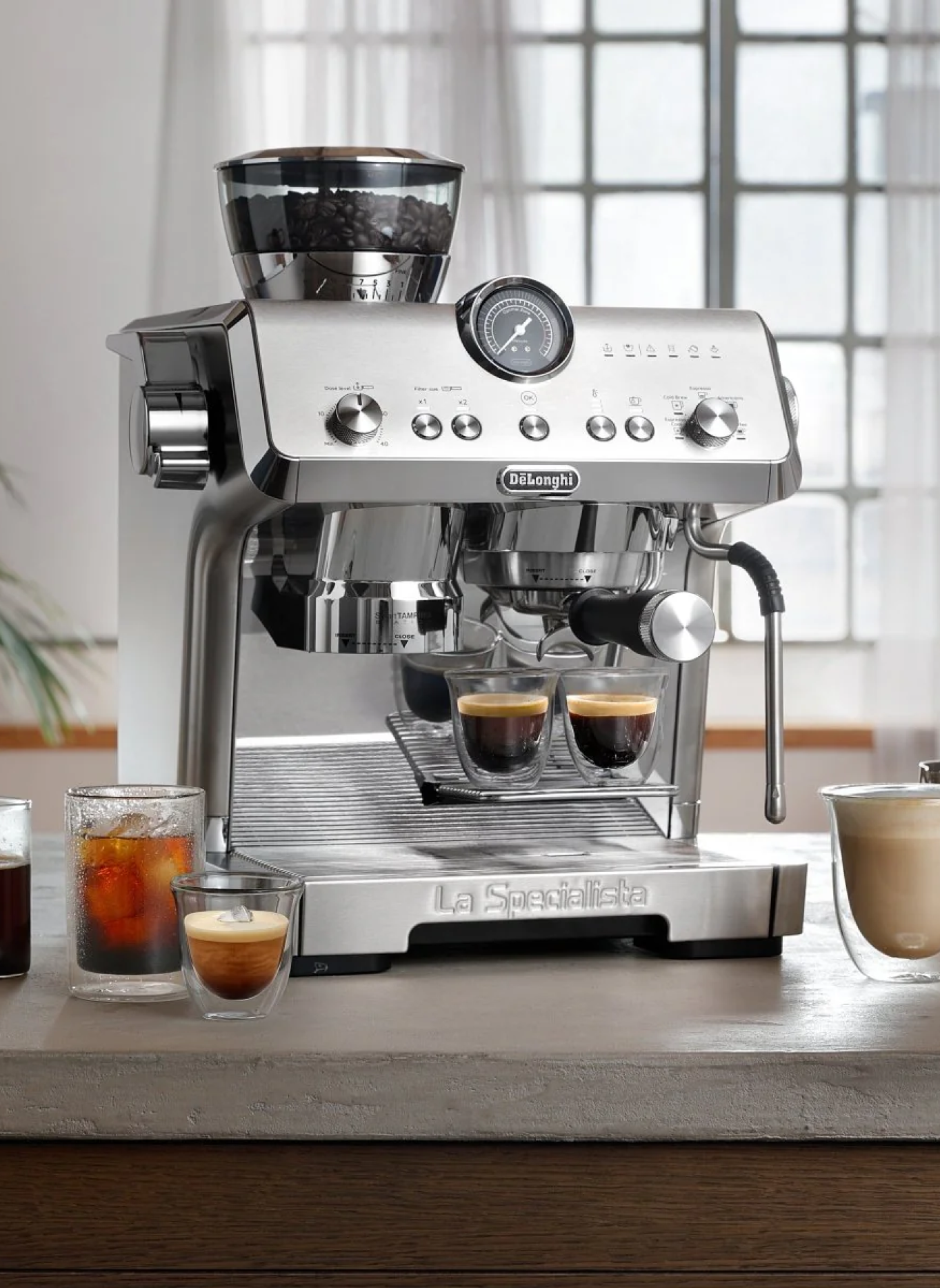
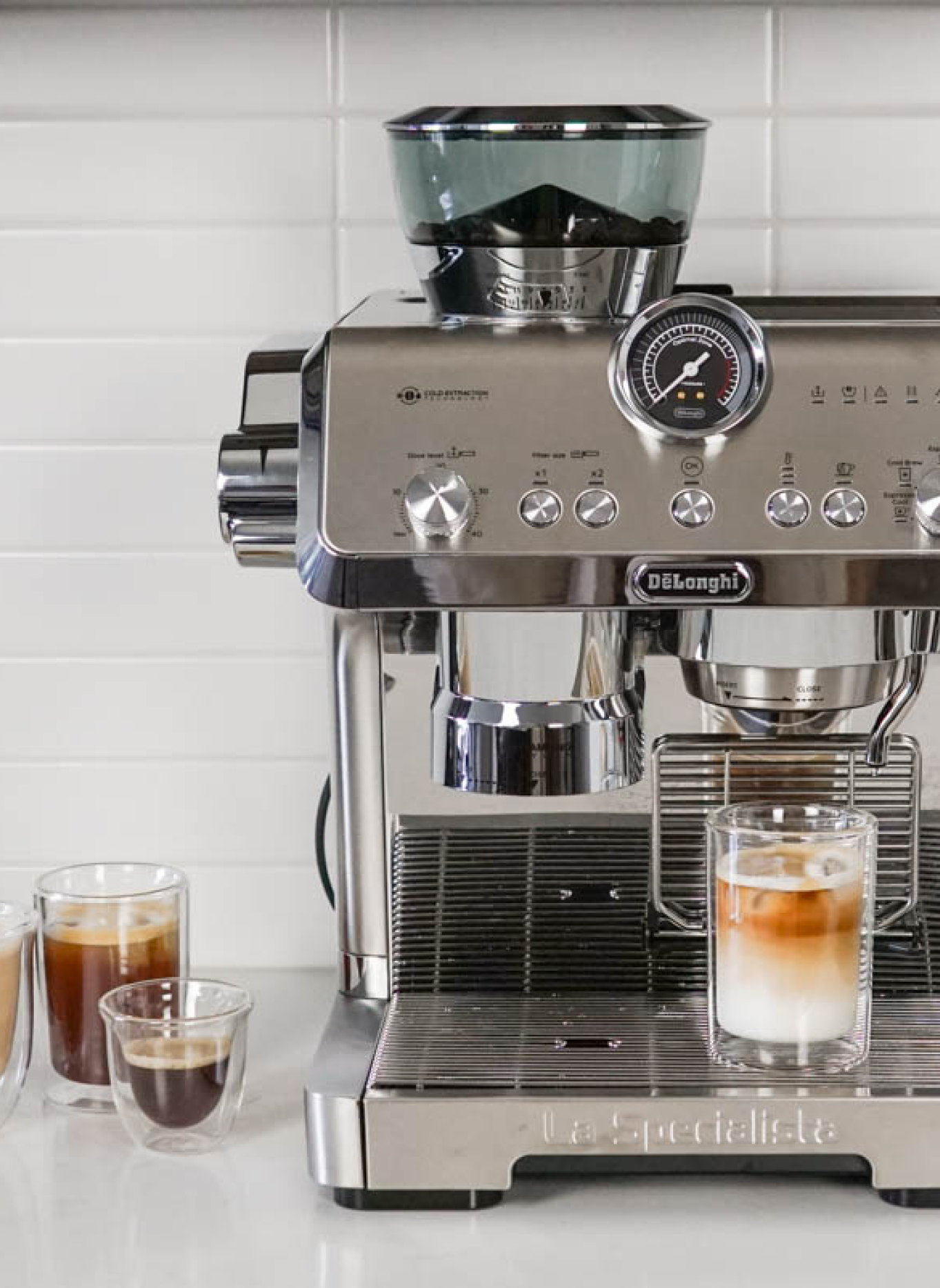
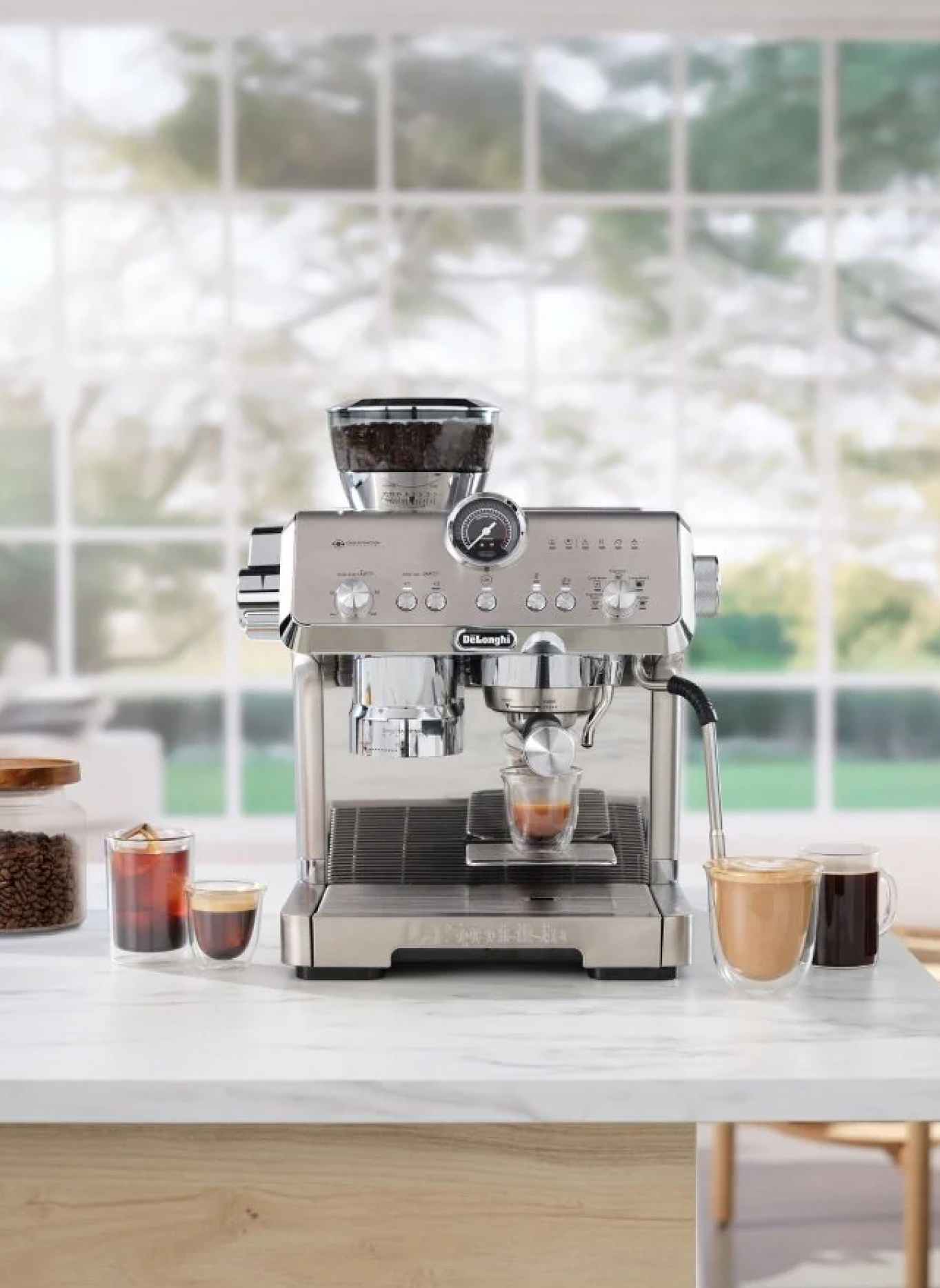
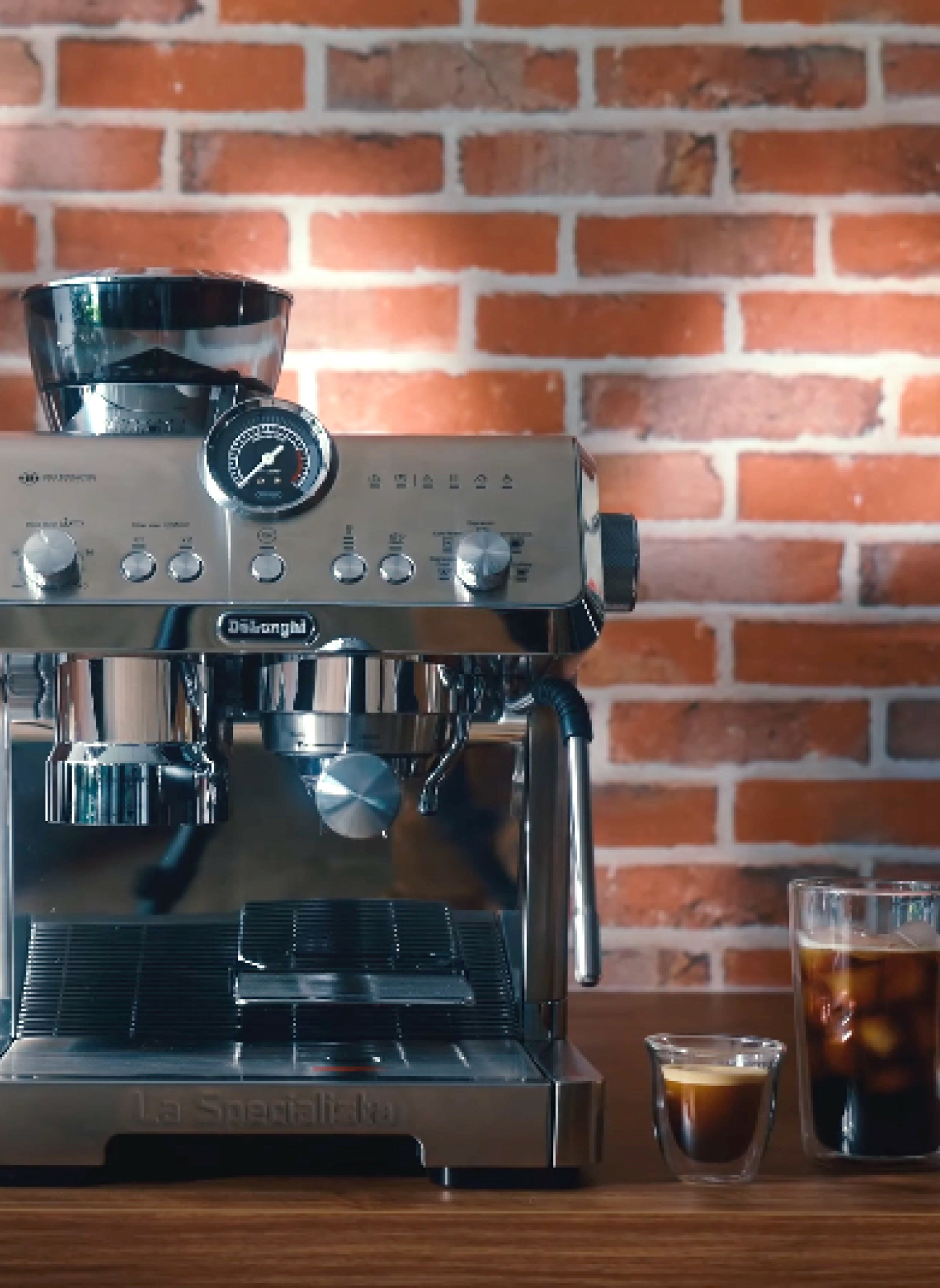
The Delonghi La Specialista Opera is a premium semi automatic espresso machine with grinder designed for users who want real barista control without the complexity of traditional prosumer setups. Positioned at the top of the Delonghi espresso machine lineup, it combines manual coffee craft — grinding, tamping, extraction, milk steaming — with engineered consistency, Cold Brew extraction, and structured workflow assistance. Unlike fully automatic systems that remove user involvement, the Opera preserves technique while stabilizing the most sensitive steps of espresso preparation. With its integrated burr grinder, Smart Tamping Station, thermoblock heating, Dynamic Pre-Infusion, My LatteArt steam wand, and Cold Extraction system, it operates as a complete Delonghi coffee machine for users who want control, progression, and versatility in both hot and cold coffee formats. This machine is built for those searching for an espresso machine with grinder, a true latte art espresso machine, and a hybrid platform that sits between appliance convenience and real espresso craftsmanship.
01 Why the La Specialista Opera Is
the Best Semi Automatic Espresso Machine with Grinder
-
Integrated grinder with 15 grind settings
-
Smart Tamping Station for uniform, clean tamping
-
Thermoblock system for fast, stable heat
-
My LatteArt wand for controlled microfoam
-
Cold Extraction for cold brew in under 5 minutes
-
Stainless-steel frame elements for longevity
02
TL ; DR What Makes This the Best Delonghi Espresso Machine
(Workflow, Stability, Versatility)
La Specialista Opera is built for users who want more than a push-button appliance but less mechanical management than a traditional prosumer machine. It is a hybrid tool: one that preserves the essential steps of espresso craft while reinforcing each step with engineered stability. The integrated grinder offers straightforward grind control; the Smart Tamping Station eliminates distribution mess and reduces variability; the thermoblock heats quickly and keeps brew temperature within a predictable band; the My LatteArt wand supports learning proper milk texturing; and the Cold Extraction system expands the machine's scope beyond espresso into refreshing, low-acidity drinks. In one sentence, the Opera is a structured pathway into espresso mastery: a machine that simplifies mechanical complexity while preserving the discipline needed for meaningful progress.
03 Why the Delonghi La Specialista Opera Matters in the Delonghi Espresso Machine Lineup Our review.
Espresso quality is fundamentally governed by consistency: grind uniformity, tamping pressure, temperature stability, and pressure behavior. Many consumer machines automate these elements entirely, removing not only error but also user influence. Others leave everything to the operator, making the learning curve steep and often discouraging. La Specialista Opera positions itself between these extremes. It retains the steps that define real espresso—grinding, dosing, tamping, extraction—while embedding mechanical safeguards that reduce the variability beginners struggle with. It does not hide the process. It organizes it.
At the center of this design is the Smart Tamping Station, a mechanism that applies uniform pressure without creating side-channeling or puck fractures. Instead of tamping on the counter and risking misalignment or over-compression, the user engages a controlled tamp that is enclosed, clean, and repeatable. This system preserves the intent of tamping—compact, even density—without requiring years of practice to master the motion.
The integrated grinder, with its 15 grind settings, further contributes to repeatability. The adjustments are stepped—not infinite like high-end commercial grinders—but they cover the espresso range with enough precision for consistent flavor tuning. For most home users, this is an appropriate balance between usability and control. The thermoblock heating system prioritizes speed and predictability. While it does not have the thermal mass of a boiler-based machine, it provides rapid readiness and a steady brewing temperature for standard usage. For a hybrid platform designed to encourage daily use, this immediacy is one of its key strengths.
The My LatteArt wand adds a layer of skill-building uncommon in this category. Instead of a fully automatic milk system, users learn real steaming technique: tip positioning, aeration, and rolling. The wand is designed to be approachable—moderate steam power, cool-touch surface, refined vortex formation—helping beginners create microfoam with definition and gloss. Then there is Cold Extraction. Unlike traditional cold brew, which requires hours, Delonghi's system produces a chilled, low-acidity beverage in under five minutes by using low pressure and ambient-temperature water to extract aromatic compounds gently. This feature dramatically increases beverage variety without requiring additional equipment.
In everyday use, the Opera demonstrates a clear philosophy: help the user develop a reliable workflow by stabilizing the steps that most often introduce inconsistency. It does not simulate café equipment; it structures the home barista's environment so that technique can grow naturally. This is the Opera's identity—a precise, organized approach to daily coffee craft.
04
Internal Design of This Espresso Machine with Grinder
Features & Benefits
Before examining each component individually, it's important to see La Specialista Opera as a complete system rather than a collection of features. This is not a traditional boiler machine where everything revolves around a single metal tank; instead, it is a distributed platform where each function—grinding, tamping, heating, extraction, steaming, and cold extraction—is handled by a dedicated subsystem. The thermoblock is responsible for fast, controlled heating. The pump generates brew pressure. The grinder shapes the particle size distribution of your coffee. The Smart Tamping Station manages density and alignment of the puck. The My LatteArt wand structures steam delivery. The Cold Extraction circuit manages low-pressure, low-temperature flow. Together, these blocks are designed to reduce random variables and make the brewing process more legible. The benefit for the user is clarity: you know which step is responsible for which outcome. As your skill grows, you can deliberately adjust each stage of the workflow instead of fighting a machine that hides its behavior behind automation. Opera is designed to be learned, not guessed.
GRINDER WITH 15 ADJUSTMENTS
The integrated grinder is the starting point of the workflow, and on the Opera it has been treated as a core performance component rather than an accessory. It uses stainless-steel burrs—two precisely machined disks that crush the beans between them rather than chopping them. Burrs matter because they determine how evenly the beans are ground and how much heat is generated during grinding, both of which directly influence flavor clarity and extraction balance. With 15 distinct grind settings, the user can move from very fine espresso-oriented grinds to slightly coarser profiles suitable for longer drinks and Cold Extraction. These are stepped adjustments, meaning each click corresponds to a repeatable change; you can always return to a previous setting with confidence. In daily use this makes dialing in much less intimidating. You might start with a medium-fine setting for a new coffee, observe the shot time and flow, then move one or two steps finer or coarser as needed. Because the grinder is integrated with the rest of the machine, you do not have to manage two separate devices on the counter or worry about retention between them. Less physical movement in the workflow means fewer chances to spill grounds or mis-dose. The net result is a grinding experience that is easy to control, easy to repeat, and transparent enough that you can feel the impact of small changes in grind size on the taste in the cup.
SMART TAMPING STATION
Tamping is the step where many home baristas lose consistency. Traditional tamping requires you to hold the portafilter in one hand and compress the coffee bed with a tamper in the other, trying to apply perfectly even pressure at a perfectly level angle. Any tilt or uneven force creates channels—paths of least resistance—where water rushes through some parts of the puck while leaving others under-extracted. The Smart Tamping Station on the Opera is designed to mechanically stabilize this step. The portafilter locks into a designated position, and the tamping mechanism applies a calibrated, centered force directly through the axis of the basket. Because the tamp happens inside the machine's structure, lateral wobble is minimized and the risk of compressing one side more than the other is dramatically reduced. In practice, this changes the daily workflow in two ways. First, cleanliness: the grounds stay in the portafilter instead of scattering across the counter, which makes preparation faster and reduces the sense of "fuss" around espresso. Second, repeatability: every shot receives a tamp that is within a narrow band of force and perfectly aligned, so when a shot runs too fast or too slow you know the cause is likely grind size or dose rather than an inconsistent tamp. This clear separation of variables is extremely valuable for learning. Over time, you start to see tamping as a stable constant, which frees mental bandwidth to focus on more advanced adjustments like distribution, yield, and brew ratio. The Smart Tamping Station does not remove you from the process; it standardizes a critical step so that you can progress reliably.
THERMOBLOCK HEATING SYSTEM
The thermoblock is the thermal engine of the Opera. Instead of storing a fixed volume of hot water in a boiler, a thermoblock heats water on demand by running it through a metal block with internal channels that are brought to temperature by electric elements. This design trades raw thermal mass for speed and controlled efficiency. In practical terms, it means the machine reaches brewing readiness in around 20 seconds rather than the many minutes required for traditional boiler systems. For a user who makes coffee early in the morning or several times throughout the day, this changes the relationship with the machine: you are more likely to use it because the friction of long warm-up times is gone. However, fast heat does not mean uncontrolled heat. The Opera's thermoblock is tuned to maintain water within a band appropriate for espresso extraction, and the temperature settings allow you to tailor this to your beans—slightly hotter for darker roasts that need energy to fully open, slightly cooler for lighter, more delicate coffees. During back-to-back brewing, the thermoblock continuously reheats incoming water, minimizing the temperature drop that can occur when a boiler is depleted. The limit is extreme volume: thermoblocks are not designed to serve a café full of people, but for home use they are remarkably stable. From a workflow perspective, the key benefit is responsiveness. You can move from idle to brewing quickly, experiment with different drinks in a single session, and always have a predictable temperature platform without worrying about flushing routines or heat-soak behavior.
DYNAMIC PRE-INFUSION
Pre-infusion is the short, often invisible phase at the beginning of an extraction where water first contacts the dry puck at a lower pressure. Its purpose is to saturate the coffee bed gently so that when full pressure arrives, the puck offers uniform resistance. Without proper pre-infusion, high-pressure water can punch through weak spots and create channels, resulting in bitter, hollow, or uneven shots. The Opera's Dynamic Pre-Infusion system does more than just wet the puck—it adapts the pre-infusion time to the density of your dose. If you tamp a slightly heavier dose, the coffee bed is more compact and requires longer to fully saturate; the system senses this and extends the low-pressure phase. If the puck is lighter and more permeable, pre-infusion is shortened to avoid over-wetting and early extraction. The user does not have to manually program this—your role is to dose and tamp consistently, and the machine fine-tunes the water's behavior for you. In day-to-day workflow, this means fewer extreme shot outcomes. Even when your grind or distribution is not perfect, Dynamic Pre-Infusion smooths the initial contact between water and coffee, giving you a wider "sweet window" where shots are still enjoyable. For beginners, it makes the learning curve less punishing; for more advanced users, it allows them to explore different doses and baskets without having to constantly reconfigure pre-infusion timing. In the cup, the effect is a more even flavor curve: sweetness develops fully, acidity is better integrated, and harsh bitterness from localized over-extraction is reduced.
MY LATTEART WAND
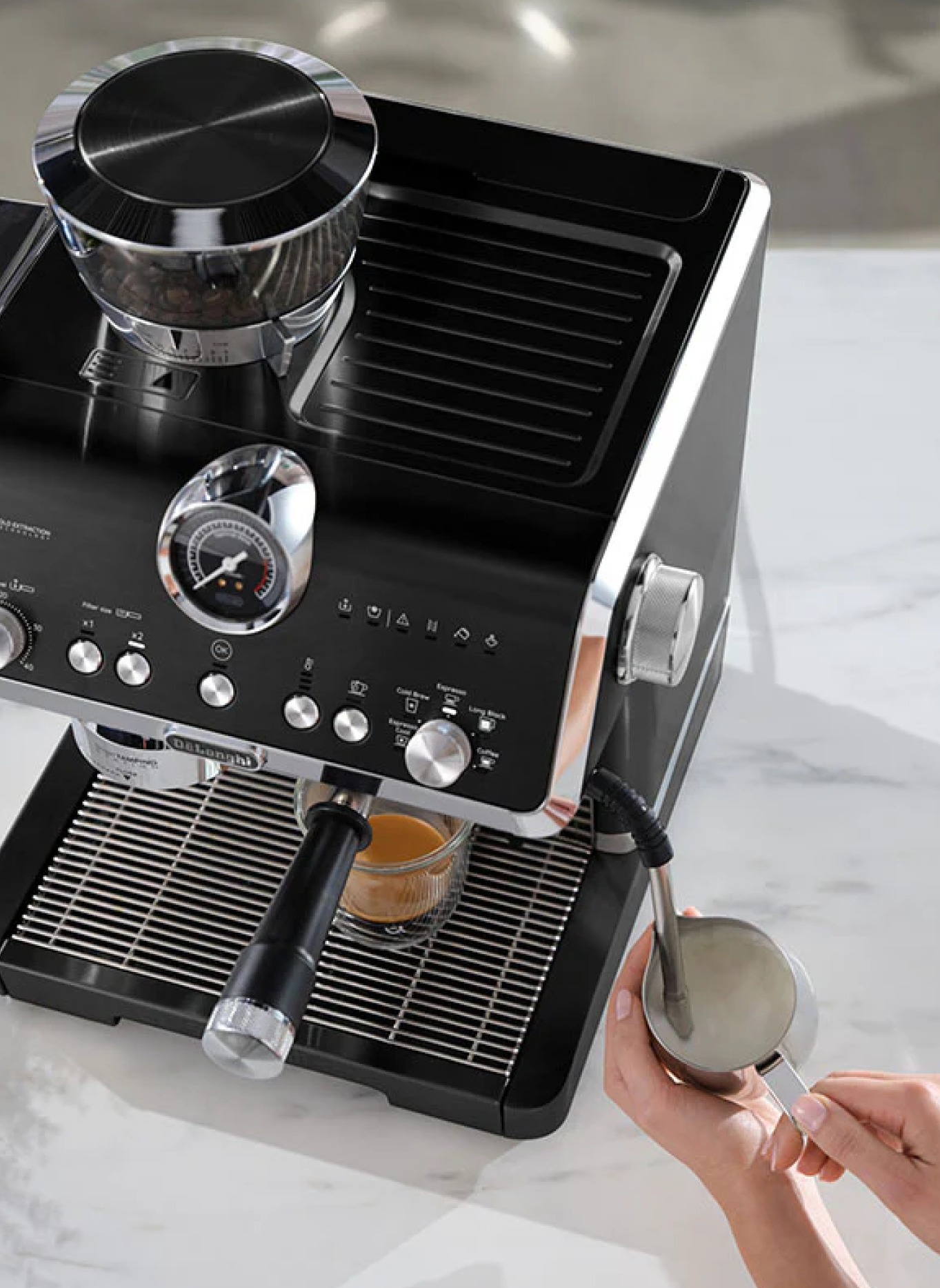
Milk steaming is where the gap between consumer machines and professional equipment is often most visible. Many home machines either overpower the user with uncontrolled steam or underdeliver, producing large bubbles rather than fine microfoam. The My LatteArt wand on the Opera is engineered to land in the precise middle ground needed for learning proper technique. It is a manual wand, meaning you are responsible for positioning the pitcher, controlling aeration, and deciding when to stop—exactly as in a café. However, the steam output is tuned to be progressive rather than explosive. When you open the valve, steam pressure ramps into a stable level that is strong enough to spin the milk into a vortex but gentle enough to give you reaction time. The tip design encourages a rolling motion in the pitcher, which is crucial for breaking down larger bubbles into a smooth, glossy microfoam. The wand itself remains cool-touch, improving safety and making it easier to reposition without burning your hand. This design choice has real workflow implications. You can practice stretching small milk volumes for cortados or larger quantities for lattes without feeling rushed. Because the wand is predictable, errors you see in the foam—oversized bubbles, dull texture, or overheated milk—can be traced back to your hand movements rather than hardware limitations. Over time, the wand becomes a training partner that responds consistently to your inputs. Once you internalize the sound and feel of properly textured milk, you can reproduce it day after day, building towards café-style cappuccinos and latte art at home.
COLD EXTRACTION SYSTEM
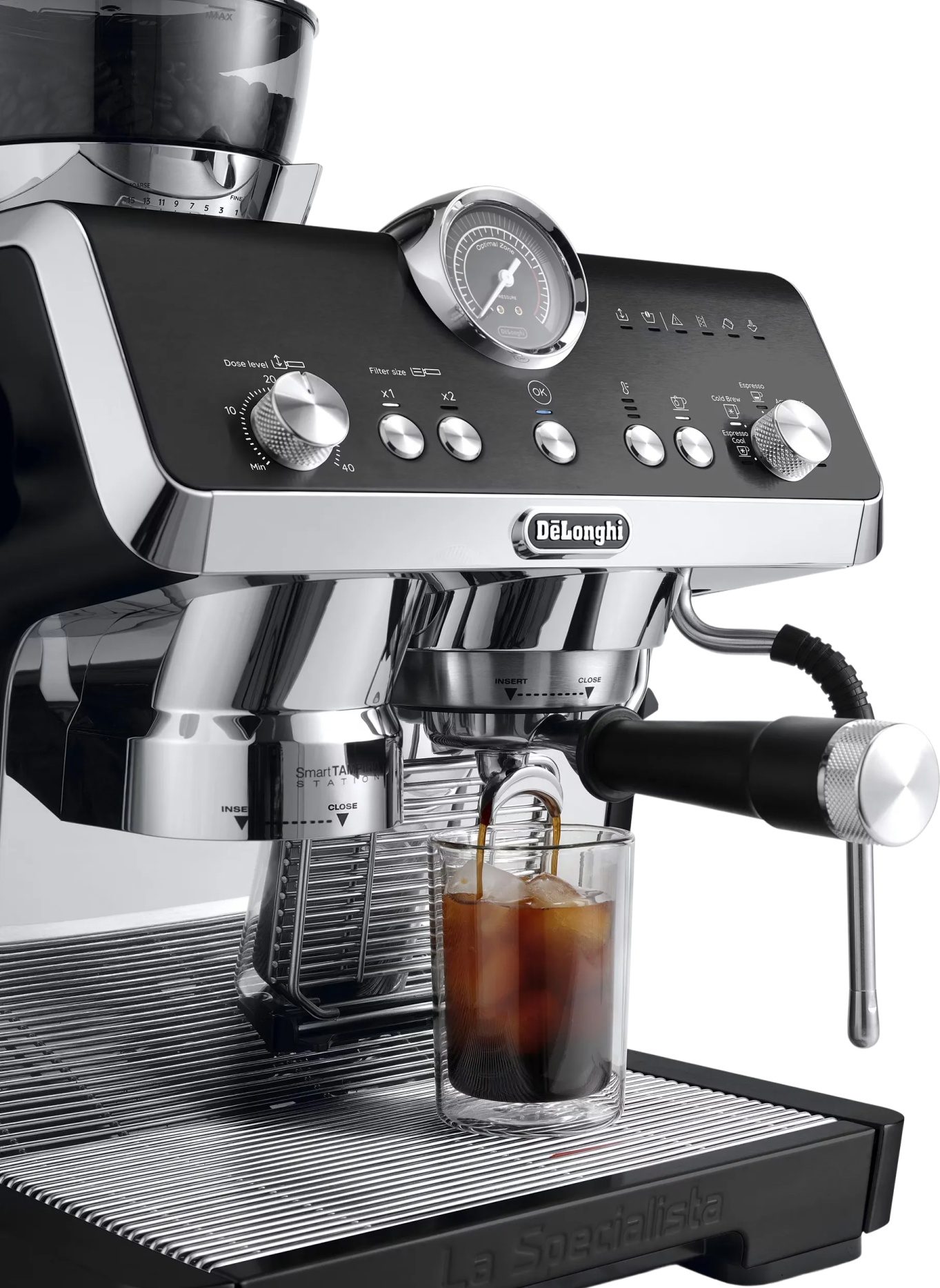
Cold Extraction is not just a marketing label; it is a distinct brewing process that changes the chemistry of what ends up in your cup. Traditional hot extraction uses high-temperature water and elevated pressure to dissolve oils, acids, and aromatic compounds quickly. This produces the dense, concentrated character of espresso but can also amplify bitterness and acidity if the balance is off. Cold Extraction, by contrast, operates with ambient-temperature water and low pressure. Because many bitter compounds and some acids are less soluble at lower temperatures, the resulting beverage emphasizes sweetness, roundness, and aromatic top notes while muting sharpness. On the Opera, activating Cold Extraction reroutes the water flow and adjusts pump behavior to deliver a slow, even saturation of the grounds over a few minutes. The process ends with a chilled, ready-to-drink coffee that does not require hours of steeping in the fridge. For the user, this changes the role of the machine in the kitchen. It becomes not just an espresso station but also a cold-brew maker and cocktail base. You can prepare a refreshing Cold Brew in under five minutes before leaving the house, or build an Espresso Cool cocktail in the evening without planning ahead. Workflow remains familiar: grind, tamp, insert the portafilter, and press the dedicated function. The difference lies in the taste profile—lower perceived acidity, minimal bitterness, and a delicate aromatic structure that shines over ice. This feature extends the machine's usefulness far beyond traditional espresso drinkers and makes it relevant year-round.
LARGE WATER RESERVOIR (2 L)
Water capacity may seem like a minor specification, but it has significant consequences for workflow stability and maintenance habits. The Opera's 2-liter removable reservoir is intentionally generous for a home machine. It allows you to pull multiple espressos, steam milk for several drinks, or run a Cold Extraction cycle without needing to refill constantly. This matters because running out of water mid-brew is one of the most disruptive events in an espresso workflow: it interrupts extractions, stresses the pump, and forces you to reset your routine. With 2 liters on board, such interruptions are rare. The removable design means the tank can be lifted out and taken directly to the sink, reducing the temptation to "top off" with small amounts that eventually lead to layered, stale water. Cleaning is easier as well; you can regularly rinse and wipe the tank, preventing biofilm buildup and preserving taste quality. Internally, stable water supply ensures the pump always has adequate volume to draw from, which helps maintain consistent pressure curves during extraction. For the user, the reservoir ultimately buys mental space. Instead of monitoring the water level obsessively, you can focus on grind, dose, and timing, knowing that the hydraulic side of the system is secure for the duration of your session.
BOILER PRESSURE AND SYSTEM INDICATORS
While the Opera does not use a traditional boiler manometer, its system indicators are the communication layer between the user and the machine's internal state. One of the most challenging aspects of espresso for beginners is knowing when a machine is truly ready—heating lights go off, but groupheads and internal paths may still be stabilizing. Opera tackles this by offering clear status feedback: indicators signal when the thermoblock has reached brew temperature, when steam mode is engaged and ready, and when Cold Extraction mode is active. These cues guide the timing of your workflow. Instead of guessing whether you should start grinding or steaming, you simply follow the machine's signals, aligning your actions with its thermal and hydraulic readiness. Over time you begin to internalize the rhythm: grind while the system completes heating, tamp as it stabilizes, brew when the indicator confirms readiness. This synchronization reduces premature extractions and underpowered steam events, both of which can compromise flavor and texture. For more advanced users, the indicators serve as reference points to structure experiments—for example, observing how shots behave if pulled immediately at readiness versus after a brief rest. In all cases, the effect is the same: the machine becomes more transparent and easier to read, which is essential for controlled, repeatable results.
STAINLESS-STEEL FRAME ELEMENTS
The Opera's stainless-steel frame elements are not only aesthetic; they are the structural backbone of the machine. Stainless steel is chosen for its combination of rigidity, corrosion resistance, and mass. Rigidity matters because it keeps internal components—pump, thermoblock, grinder, and hydraulic lines—firmly in place even as vibration occurs during operation. When these components are stable, the mechanical stresses on joints and seals are reduced, which extends the lifespan of the machine and preserves performance specifications over time. Corrosion resistance is equally important: repeated exposure to heat, moisture, and minor spills can degrade lesser materials. Stainless steel slows this process dramatically, maintaining both structural integrity and surface appearance. From a workflow standpoint, the mass of the frame has a subtle but noticeable effect: when you lock in the portafilter or engage the Smart Tamping Station, the machine does not shift or rock on the counter. This stability encourages precise motions and reduces the micro-movements that can disturb the coffee bed before extraction. Over years of use, a rigid, corrosion-resistant chassis also means that servicing—such as gasket replacements or internal cleaning—is more straightforward, as screws and panels remain accessible and intact. In short, the stainless-steel structure is an investment in long-term reliability and a calmer, more controlled daily interaction with the machine.
DIMENSIONS & WEIGHT
With dimensions of 380 x 370 x 445 mm and a weight of 17.45 kg, La Specialista Opera occupies a deliberate middle ground between compact consumer appliances and heavy prosumer machines. The footprint is large enough to house the integrated grinder, thermoblock, tamping mechanism, and cold-extraction system without cramping ergonomics; yet it remains manageable on a standard kitchen counter, with room for a scale and accessory tray beside it. The height allows for most domestic cabinets while still providing a usable cup-warming surface. Weight plays a functional role as well. At over 17 kg, the machine has enough mass to resist the torque applied when locking in the portafilter or operating the tamping lever. This resistance prevents the small shifts that can loosen fittings or stress plastic feet over time. During extraction, the additional mass dampens the vibration from the pump, resulting in a quieter, more composed experience and less "walking" of cups on the drip tray. For the user planning their kitchen layout, the dimensions mean that the Opera becomes a dedicated coffee station rather than an appliance that constantly moves. Once installed, it feels like a fixed tool—stable, present, and ready—supporting the idea that espresso is not a quick gadget trick but a daily practice anchored in a reliable, deliberately proportioned machine.
05
Real-World Performance of the La Specialista Opera as a Delonghi Coffee Machine
Real-World Performance
DISCIPLINED DAILY USE
The Opera's workflow is structured deliberately. From the moment the machine warms, each step guides the user toward repeatability: grind, tamp, extract, steam, or switch to cold extraction. The thermoblock provides quick heat readiness, while the Smart Tamping Station guarantees a baseline of uniform density in the puck. For users who want a reliable morning routine without sacrificing the authenticity of espresso preparation, the Opera establishes a disciplined workflow that rewards consistency. Over time, this routine becomes second nature—dialing in grind size, adjusting dose, refining tamp—and the machine responds predictably without masking user intent.
BACK-TO-BACK SHOTS
The Opera handles sequential espresso shots effectively when steaming is not required between extractions. The thermoblock maintains heat stability across short cycles, enabling several extractions without noticeable drift. Because the machine does not rely on a large boiler, temperature management remains consistent as long as the user allows brief system recovery between shots. This behavior suits homes with multiple espresso drinkers.
MILK DRINKS
The My LatteArt wand provides controlled milk steaming suitable for cappuccinos, flat whites, and lattes. While it does not match the power of a professional dual-boiler machine, it excels in predictability. The steam is dry enough to avoid excessive dilution, and the moderate output gives beginners time to position the pitcher correctly, introduce air gradually, and transition smoothly into the rolling phase. Once mastered, the wand can achieve glossy microfoam that supports latte art. The process is intentional rather than fast, aligning well with users who enjoy learning technique.
COLD BREW AND ESPRESSO COOL
Cold Extraction adds an entirely new dimension to daily use. Whether preparing cold brew for morning consumption or creating iced cocktails in the evening, the Opera expands beyond espresso without requiring specialized equipment or lengthy preparation. The low-pressure cold extraction produces delicate, sweet flavors with reduced bitterness and acidity. This versatility is rare in machines of this category and gives the Opera a broader functional identity—hot or cold, espresso or long drinks, the workflow stays intuitive.
TECHNICAL PROGRESSION & SKILL DEVELOPMENT
The Opera is engineered to teach. By stabilizing tamping, grind adjustment, and heat readiness, it isolates the variables that matter most to flavor. Users begin to recognize the effects of grind size on flow rate, the influence of tamp density on extraction clarity, and the relationship between milk temperature and foam texture. Nothing is abstracted away. The machine becomes a technical platform for improvement—a bridge between fully automated appliances and traditional manual setups.
06
La Specialista Opera vs Other Espresso Machines
Comparisons
OPERA VS BREVILLE BARISTA EXPRESS
These two machines occupy the same competitive tier in the home-espresso market: hybrid, grinder-integrated platforms designed to help beginners progress into real espresso technique without jumping into prosumer equipment. They are often compared because they share a similar promise — "a complete, guided espresso station" — yet they achieve this through fundamentally different engineering philosophies. Both offer structured workflows, both target the same budget range, both appeal to people buying their first serious machine. What separates them is not the category, but the intention behind their design. Breville approaches this market through electronic precision. The Barista Express is built around tightly controlled temperature (PID), predictable brewing stability, and ergonomics that mirror professional machines in simplified form. It aims to act as a stabilizing partner: it corrects heat, softens user error, and keeps extraction variables within a safe band. La Specialista Opera approaches the same user through mechanical discipline and workflow clarity. The Smart Tamping Station stabilizes puck density at a structural level. The Dynamic Pre-Infusion adapts water behavior to the user's dose. The My LatteArt wand teaches milk texturing through controlled steam rather than speed. And the Cold Extraction system expands the machine beyond espresso, allowing experimentation in iced drinks and lower-acidity profiles. In practice, this creates two distinct experiences. The Barista Express produces reliable espresso with minimal punishment for small mistakes, making it ideal for users who want thermal precision and a smoother learning curve. The Opera builds better habits: it teaches proper tamping pressure, puck structure, and milk control, while delivering more beverage versatility. Price generally overlaps, confirming their shared market. But where Breville sells "precision through electronics," Opera sells "consistency through engineered workflow." Verdict: Barista Express for users who value PID-driven temperature stability and a forgiving extraction platform; Opera for users who want guided technique, structural consistency, and access to both hot and cold beverage formats.
OPERA VS BREVILLE BARISTA PRO
The Barista Pro and the La Specialista Opera are compared because they sit at the very top of the "hybrid, grinder-integrated, skill-building" category. They target the same type of user: someone who wants a fast, structured espresso workflow without stepping into prosumer E61 territory. Both machines aim to compress grinding, tamping, extraction, and milk steaming into a single cohesive ecosystem. But they diverge in execution. The Barista Pro focuses on speed, electronics, and immediate responsiveness, while the Opera focuses on mechanical consistency, workflow clarity, and beverage versatility. The Barista Pro's identity is defined by its thermojet heating system, which reaches brew temperature almost instantly and recovers in seconds between shots. Its integrated PID and digital temperature controls give it finer thermal behavior than the Opera. For users who regularly brew lighter roasts, or who want to dial in coffees with very tight temperature tolerance, the Barista Pro provides a more sensitive thermal platform. Its interface—digital display, explicit shot timing, and temperature feedback—is designed for users who want precise information to guide decisions. The Opera, by contrast, invests in shaping the physical steps of the workflow. The Smart Tamping Station stabilizes the puck. Dynamic Pre-Infusion adjusts automatically to puck density. The My LatteArt wand gives slower, more pedagogical steam suitable for learning microfoam. And the Cold Extraction system opens an entire brewing dimension the Barista Pro does not have. Milk steaming represents another philosophical difference. The Barista Pro provides strong, café-oriented steam power that rewards confident motion but punishes hesitation. The Opera offers a gentler wand that helps users internalize microfoam fundamentals without being overwhelmed by high pressure. Price positioning often places the Barista Pro slightly above the Opera, reflecting its more advanced thermal system and digital interface. But the Opera counters with features that the Pro lacks entirely, especially cold brewing and guided tamping. Verdict: Barista Pro for users prioritizing thermal precision, speed, and high steam power; Opera for users who want a structured workflow, consistent puck preparation, and hot-and-cold beverage versatility.
OPERA VS GAGGIA CLASSIC PRO
These two machines are compared because they represent the two most common upgrading paths for espresso beginners: the manual, authentic, entry-prosumer experience versus the assisted hybrid learning platform. They are not in the same category, but they target the same psychological moment: "I want something better than a basic consumer machine." The Classic Pro represents a minimalist, craft-oriented path. The Opera represents a guided, engineered-for-consistency path. The Gaggia Classic Pro is an icon of traditional home espresso. A compact single-boiler machine with commercial-style group architecture, real manual steaming power, and the ability to evolve through mods and accessories. It requires a high-quality grinder, good distribution technique, and an understanding of temperature surfing. Nothing is automated. The Classic Pro is brutally honest: if your grind or tamp is wrong, the result will reflect it immediately. This makes it a favorite for enthusiasts who enjoy problem-solving and mechanical responsibility. The La Specialista Opera exists to solve the exact pain points that push many people away from machines like the Classic Pro. It integrates the grinder so beginners don't need to navigate grinder compatibility. It automates tamping alignment so distribution mistakes are less destructive. It applies intelligent pre-infusion to stabilize the extraction curve. Its thermoblock eliminates long heat-up times. And its Cold Extraction system gives access to beverage types that the Gaggia cannot produce. Cup quality scales differently on both machines. The Classic Pro has a higher long-term ceiling for espresso once paired with an excellent grinder and proper technique; its thermal mass and puck dynamics reward advanced users. The Opera has a higher floor: beginners achieve consistent, enjoyable espresso right away with far fewer catastrophic errors. The Gaggia is generally less expensive upfront but requires investment in burr grinders, precision baskets, and accessories. The Opera costs more but reduces the ecosystem complexity dramatically. Verdict: Classic Pro for users who want pure manual espresso, modding potential, and years of craft development; Opera for users who want consistency from day one, integrated workflow stability, and a wider drink repertoire that includes cold extraction.
OPERA VS LELIT ANNA (ENTRY-LEVEL MANUAL)
These machines sit in very different corners of the espresso landscape, but they are compared because they represent two possible paths for a beginner who wants to "learn real espresso": the manual purist route or the assisted hybrid route. Both machines address users transitioning beyond basic appliances, but they ask very different things of the operator. The Lelit Anna is built according to traditional espresso logic: a small single boiler, manual controls, no tamping assistance, no integrated grinder, and minimal automation. It is a training instrument more than an appliance. The Anna rewards users who want full control and accept responsibility for every variable — grind, dose, tamp, group temperature, steaming technique. Mistakes are visible, and progress is earned. The machine is inexpensive initially, but demands additional investments in grinders and accessories, and a willingness to manage temperature surfing and manual steaming. La Specialista Opera is built for a different type of beginner: someone who wants to learn espresso seriously but prefers a structured, guided pathway rather than a raw technical machine. It stabilizes the most difficult steps — tamping, pre-infusion behavior, milk texturing — without removing the user from the process. The integrated grinder reduces system complexity. The thermoblock eliminates long warm-up times, making espresso easier to integrate into daily routines. Cold Extraction expands the machine into areas the Anna cannot reach. Price and positioning reflect these philosophies. The Anna is the "craft ethos in its most accessible form." The Opera is the "learning system engineered to reduce frustration while building real skill." Verdict: Anna for users who desire full manual mastery and accept a steeper learning curve; Opera for those who want to progress more quickly through guided mechanics, broader drink capability, and a more forgiving daily workflow.
OPERA VS LA SPECIALISTA PRESTIGIO
These two machines are compared because they belong to the same internal family at Delonghi and share core architectural principles: integrated grinding, assisted tamping, and a guided espresso workflow. They target similar profiles — beginners or intermediates wanting a cohesive espresso station without external accessories. Yet the Opera is positioned as the more advanced, more versatile evolution of the Prestigio. The key divergence lies in functional scope and refinement. The Prestigio focuses exclusively on hot coffee: espresso, long coffee, and milk drinks. It is designed to simplify preparation and provide a stable introduction to espresso. However, its steaming wand, while functional, is less optimized for microfoam learning, offering a more general household steaming experience. The Opera adds two critical layers: beverage versatility through Cold Extraction and improved milk texture development through the My LatteArt wand. Cold Extraction transforms the machine into a multi-temperature brewing platform, allowing iced drinks, low-acidity brews, and creative beverage building. The LatteArt wand, with its refined flow and controlled power, supports more serious milk technique and smoother microfoam, enabling progress into latte art — something the Prestigio makes possible but not as accessible. In positioning, the Prestigio is the "espresso every day" machine. The Opera is the "espresso, milk craft, and cold-brew exploration" machine. Price follows this hierarchy, with the Opera justified by a wider set of engineered capabilities. Verdict: Prestigio for users who want reliable hot espresso with fundamental assistance; Opera for users wanting a full-spectrum machine capable of specialty milk drinks, cold brewing, and long-term skill development.
OPERA VS Delonghi MAGNIFICA
The Magnifica and the La Specialista Opera are compared because they represent two different answers to the same question: "What is the next step after basic espresso machines?" Both are Delonghi products, but they sit on opposite sides of the espresso philosophy spectrum. The Magnifica is a fully automatic bean-to-cup system. It handles grinding, dosing, tamping, extraction, and in some versions milk preparation. Its mission is consistency and convenience. You push a button and get a drink. There is no tamping to correct, no grind technique to learn, no steaming motion to master. For users who want minimal involvement and value speed above craft, the Magnifica is the simplest and most stable path. The La Specialista Opera exists for users who want more than consistency — they want progression. Where the Magnifica hides variables, the Opera exposes them in a controlled way. You grind, you tamp, you engage the pre-infusion, you steam milk manually. These steps are supported but not hidden, allowing the user to grow technically over time. Quality behaves differently on each machine. The Magnifica excels with dark or medium blends, delivering drinkable, smooth results with no effort. But its extraction profile is designed for universality, not nuance. Light roasts, experimental profiles, and precise flavor tuning remain outside its comfort zone. The Opera, even with its thermoblock and hybrid nature, offers more potential for complexity in the cup because the user can manipulate grind size, yield, pre-infusion response, and milk texture. It also introduces Cold Extraction — a brewing mode the Magnifica does not support — expanding the drink repertoire into summer beverages, cocktails, and low-acidity profiles. Pricing reflects the difference in philosophy: Magnifica is positioned as an appliance; Opera as a learning tool. Over years of ownership, the Opera remains more repairable because many of its functional parts are external (portafilter, grinder, wand), whereas fully automatics require internal servicing when components wear down. Verdict: Magnifica for users wanting maximum convenience and zero skill requirement; Opera for users wanting control, growth, specialty-style beverages, and a machine that evolves with their technique.
OPERA VS Delonghi DEDICA
These two machines are compared because they often represent two steps in the same customer journey. The Dedica is the accessible entry point — slim, affordable, and simple — while the Opera is a fully developed espresso station offering grinder integration and workflow stabilization. People frequently move from Dedica to Opera when they want deeper control, better consistency, and more meaningful progression. The Dedica is designed for convenience-driven beginners: minimal footprint, fast heat-up, pressurized baskets, and modest steam power. Its purpose is to introduce espresso-like beverages with almost no learning curve. However, its engineering limitations place a ceiling on quality: temperature fluctuations, limited puck depth, inconsistent milk steaming, and reliance on pre-ground coffee unless paired with a separate grinder. The Opera dismantles all these limitations. It provides a stable grinder, precise tamping, improved thermal behavior, real milk microfrothing capability, and beverage versatility beyond hot espresso. The workflow shifts from "make a quick coffee" to "understand and improve extraction." While significantly more expensive, the Opera replaces multiple devices — grinder, tamper, milk system — and invites the user into the craft rather than the simulation of espresso. The positioning is clear: Dedica is ideal for users who want the smallest possible espresso footprint with minimal effort. The Opera is for users ready to elevate from beginner-level espresso to structured, repeatable, skill-oriented brewing. Verdict: Dedica for small spaces and minimal involvement; Opera for users who want a serious, all-in-one machine that supports real technique, consistency, and long-term growth.
OPERA VS FULLY AUTOMATIC MACHINES (OVERALL CATEGORY COMPARISON)
This comparison exists because many buyers deciding on the Opera are simultaneously considering a fully automatic machine — often from the same brand. The decision reflects not just budget, but philosophy: "Do I want to participate in espresso, or do I want espresso to happen for me?" Fully automatic machines represent convenience, speed, and push-button reliability. The Opera represents involvement, technique, and the gradual building of skill. Fully automatic machines take ownership of almost every variable: grinding, dosing, tamping, pre-infusion, extraction pressure, milk frothing (if automatic), and cleaning. They are ideal for users who want a predictable drink without learning the craft. Their drawbacks come from the same place: the machine makes the decisions, which limits flavor exploration and reduces your influence on the final cup. The extraction profile is optimized for consistency, not experimentation. The Opera does the opposite. It stabilizes the workflow without removing the user. You grind, you tamp, you steam, you choose ratios, you adjust grind settings. The machine helps by reducing the likelihood of catastrophic mistakes — uneven tamping, incorrect pre-infusion, unpredictable milk texture — but you are still the operator. You can improve. You can tune flavor. You can understand extraction. In terms of cup quality, the best fully automatics deliver good, consistent results, especially for medium and dark roasts. But they struggle with clarity, brightness, and complexity compared with manual workflows. The Opera, thanks to its hybrid design, can approach more nuanced espresso profiles and allows users to tailor the shot to the beans. In long-term ownership, fully automatics require descaling and periodic internal maintenance, and repairs can be more expensive because components are integrated. The Opera, by contrast, has externalized workflow mechanics (portafilter, grinder, wand), making cleaning simpler and long-term stability more accessible. Verdict: fully automatic machines for users valuing convenience, speed, and minimal involvement; Opera for users wanting real influence over espresso quality, a learning curve, a growth path, and access to both hot and cold specialty drinks.
07 Pros
Best Semi Automatic Espresso Machine with Grinder for Home Use
08 Cons
Limitations of This Delonghi Espresso Machine
09 Should You Buy the Delonghi La Specialista Opera Espresso Machine?
The La Specialista Opera is built for a very specific kind of user — someone who does not want the machine to take over, but who does not want to wrestle with the volatility of a fully manual setup either. It sits deliberately in the middle ground between automation and craftsmanship, offering enough structure to make the process stable, yet enough user responsibility to make the result meaningful. That hybrid identity is what defines whether the Opera is the right choice for you. If you picture the espresso market as a spectrum, fully automatic machines occupy one end: consistency through automation, minimal involvement, predictable outcomes, no learning. At the opposite end sit traditional single-boiler or E61 machines: full responsibility, full control, and a long learning curve that demands precision and patience. The Opera intentionally avoids both extremes. It was engineered for home users who want to understand espresso and taste the difference when technique improves, but who don't want their morning routine dominated by calibration rituals, temperature surfing, and the fragility of manual tamping. In daily use, this becomes very clear. The Smart Tamping Station removes one of the biggest early sources of inconsistency, which allows beginners to focus on grind size, flow, and taste instead of fighting with puck preparation. The Dynamic Pre-Infusion system adapts itself to the density of the dose, smoothing out mistakes without hiding them — you still see how grind size affects extraction, but small errors no longer ruin the cup. The My LatteArt wand offers a slower, more controlled steam profile that encourages learning instead of rushing, making microfoam and latte art achievable for users who previously relied on automatic frothers. And the Cold Extraction system changes the role of the machine entirely, giving you access to low-acidity iced drinks, cocktails, and creative brews that expand espresso from a ritual into a broader beverage practice. The question, then, is not simply whether the Opera makes good coffee — it does. The real question is whether you value a guided progression toward competence. The Opera is not a machine that hides your technique; it reflects it back to you in a manageable way. It's a platform built to help users grow from "I can follow steps" to "I understand what extraction is doing." Each session teaches something: how grind changes affect flow, how tamp density influences clarity, how milk texture transforms with tiny variations in steam wand angle. The reward is not just the drink, but the refinement of your abilities. At the same time, the Opera respects the realities of home life. It heats quickly, it stays clean thanks to contained tamping, it reduces the number of accessories you need on the counter, and it minimizes ritual friction. You don't need the patience required for a manual boiler machine, but you still get the sense of involvement that makes espresso satisfying. You should buy the La Specialista Opera if you want a machine that bridges convenience and craft — one that guides you without infantilizing you, supports you without automating the meaning out of espresso, and produces results that improve as your understanding deepens. If you want a structured ritual that can adapt to your mood — a quick morning shot, a carefully dialed espresso, a cappuccino with real microfoam, or a cold brew extracted in minutes — the Opera gives you all of this in a cohesive, disciplined platform. With high-quality beans, thoughtful water, and a consistent routine, the Opera becomes not just a machine but a long-term learning environment — one that elevates your coffee from a habit to a craft you participate in every day.
10 Complete Technical Specifications of the Delonghi Specialista Opera
11 FAQ: La Specialista Opera Use, Cleaning, Descaling, Milk & Cold Brew
How long does La Specialista Opera take to heat up?
The thermoblock reaches brewing temperature in about 20 seconds. For best extraction stability, allowing 2–3 minutes ensures the internal water path and portafilter fully equilibrate.
Is the Smart Tamping Station necessary?
It is not strictly mandatory, but it is extremely useful for consistency. It applies a calibrated, centered pressure that eliminates uneven tamping, reduces channeling, and improves repeatability.
Can I steam milk and brew at the same time?
No. Like most thermoblock systems, brewing and steaming are sequential, not simultaneous. However, switching between modes is fast.
How does Cold Extraction work?
Cold Extraction uses ambient-temperature water and low pressure to gently extract aromatic compounds without heat, producing a smooth, low-acidity coffee in under five minutes.
Is the grinder good enough for real espresso?
Yes. The integrated burr grinder with 15 stepped settings provides sufficient precision for proper espresso dialing, with stable and consistent particle size.
Can I make multiple drinks in a row?
Yes. The thermoblock maintains good thermal stability for back-to-back espresso shots, with only short recovery time required between brewing and steaming cycles.
Is the Opera suitable for beginners?
Yes. It preserves real espresso workflow while stabilizing the most difficult steps (tamping, pre-infusion, temperature), allowing fast progress with fewer critical errors.
What maintenance does it require?
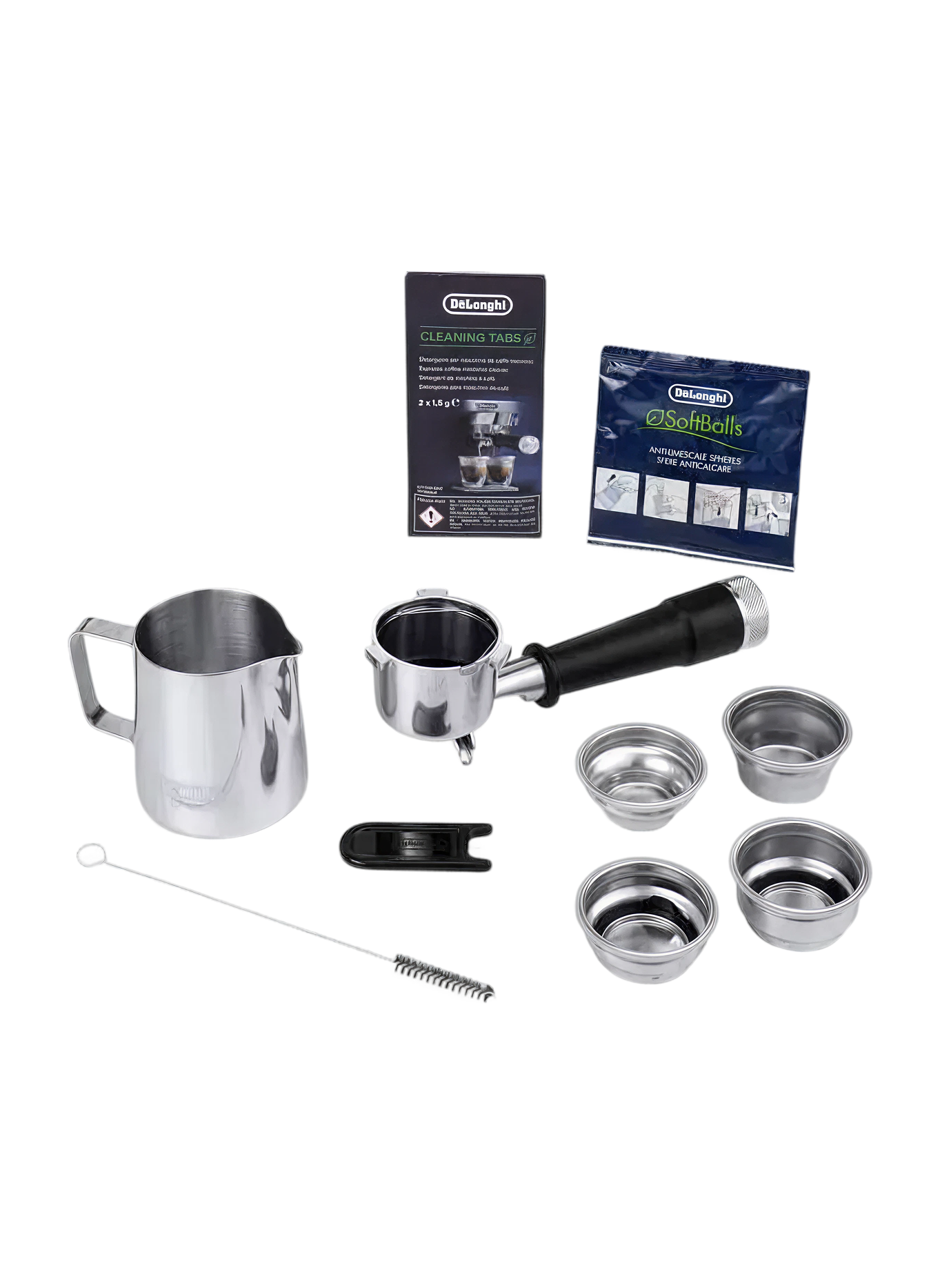
Regular steam wand cleaning, drip tray emptying, periodic descaling, and routine portafilter and grinder cleaning. The large removable water tank simplifies hygiene.
What water should I use?
Use low-mineral water (40–70 ppm). High-mineral water accelerates limescale buildup and shortens thermoblock lifespan.
What beverages does it excel at?
Balanced espresso, americanos, cappuccinos, flat whites, cold brew, and espresso-based iced drinks and cocktails.
How to descale Delonghi La Specialista?
Activate the descaling program, add Delonghi descaler to the tank, and let the automatic cycle clean the internal hydraulic system.
How to backflush Delonghi La Specialista?
Backflushing is not required. La Specialista models do not use a traditional three-way solenoid valve like prosumer machines.
How do I reset my Delonghi La Specialista?
Turn the machine off, unplug it for a few minutes, then restart. Descaling alerts reset automatically after a full cleaning cycle.
How long does it take to descale Delonghi La Specialista?
A complete descaling cycle takes about 25–30 minutes.
How to clean Delonghi La Specialista?
Rinse the portafilter daily, purge the steam wand after each use, empty the drip tray regularly, and clean the grinder chute weekly.
How to use Delonghi espresso machine?
Fill the tank, grind fresh beans, dose and tamp, lock in the portafilter, start extraction, and steam milk separately if needed.
How to descale Delonghi espresso machine?
Use Delonghi EcoDecalk and run the built-in descaling program to remove internal limescale.
How to clean Delonghi espresso machine?
Clean the brew head, rinse the portafilter, purge the steam wand, empty the drip tray, and perform regular internal rinsing.
How to work Delonghi espresso machine?
It heats water through a thermoblock, then forces it through finely ground coffee under controlled pressure to extract espresso.
Are Delonghi espresso machines good?
Yes. They are known for reliability, ease of use, and stable extraction, especially in the semi-automatic La Specialista and Dedica ranges.
How to use Delonghi coffee machine?
Fill the tank, add coffee or beans, select the drink, and the machine automatically manages heating and brewing.
How to descale Delonghi coffee machine?
Insert descaling solution into the tank and run the automatic descaling program as instructed.
How to work Delonghi coffee machine?
Depending on the model, water is either pressure-brewed for espresso or gravity-brewed for classic coffee.
How to use a Delonghi Nespresso coffee machine?
Insert a capsule, press the extraction button, and the machine automatically controls pressure, temperature, and volume.
How to descale espresso machine?
Run an acidic descaling solution through the internal water circuit to dissolve mineral deposits and restore flow.
How to clean espresso machine?
Rinse the group head, clean the portafilter and basket, purge and wipe the steam wand, and empty the drip tray regularly.
09/10


Workflow
Consistency
08/10
Learning
Support
09/10
Grinder
Quality
10/10
Feature
Versatility
{{for-who-title-right}}
Find where to buy La Specialista Opera
Apply to become a reseller

La Specialista Opera Manufacturer — Delonghi
Delonghi is a globally recognized Italian manufacturer of home appliances, specializing in coffee machines, kitchen appliances, and climate control products. Founded in 1902 in Treviso, Italy, the company has over a century of experience in engineering and design. Delonghi is known for combining Italian design aesthetics with innovative technology to create products that enhance everyday life. In the coffee category, Delonghi offers a comprehensive range of machines from fully automatic bean-to-cup systems to manual espresso machines. The La Specialista line, including the Opera model, represents Delonghi's commitment to bringing barista-quality coffee experiences into the home while maintaining accessibility and ease of use. Delonghi products are sold worldwide and are recognized for their reliability, elegant design, and focus on user experience. The company continues to innovate in home coffee technology, introducing features like Smart Tamping, Dynamic Pre-Infusion, and Cold Extraction systems that bridge the gap between convenience and craftsmanship.