La Pavoni Mini Cellini Review — E61 Espresso Machine for Home Baristas Coffee Machine by La Pavoni

Start at $799
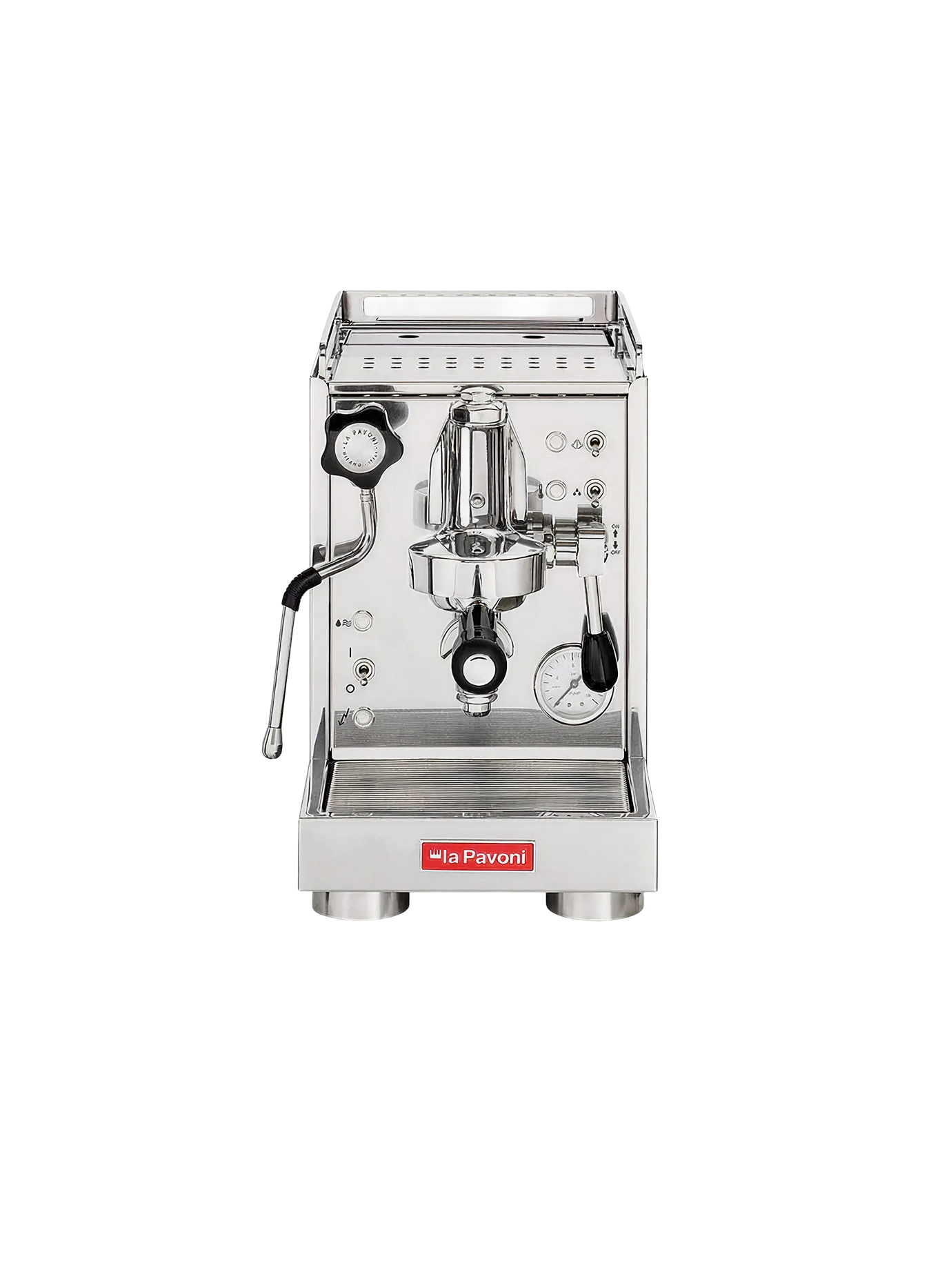
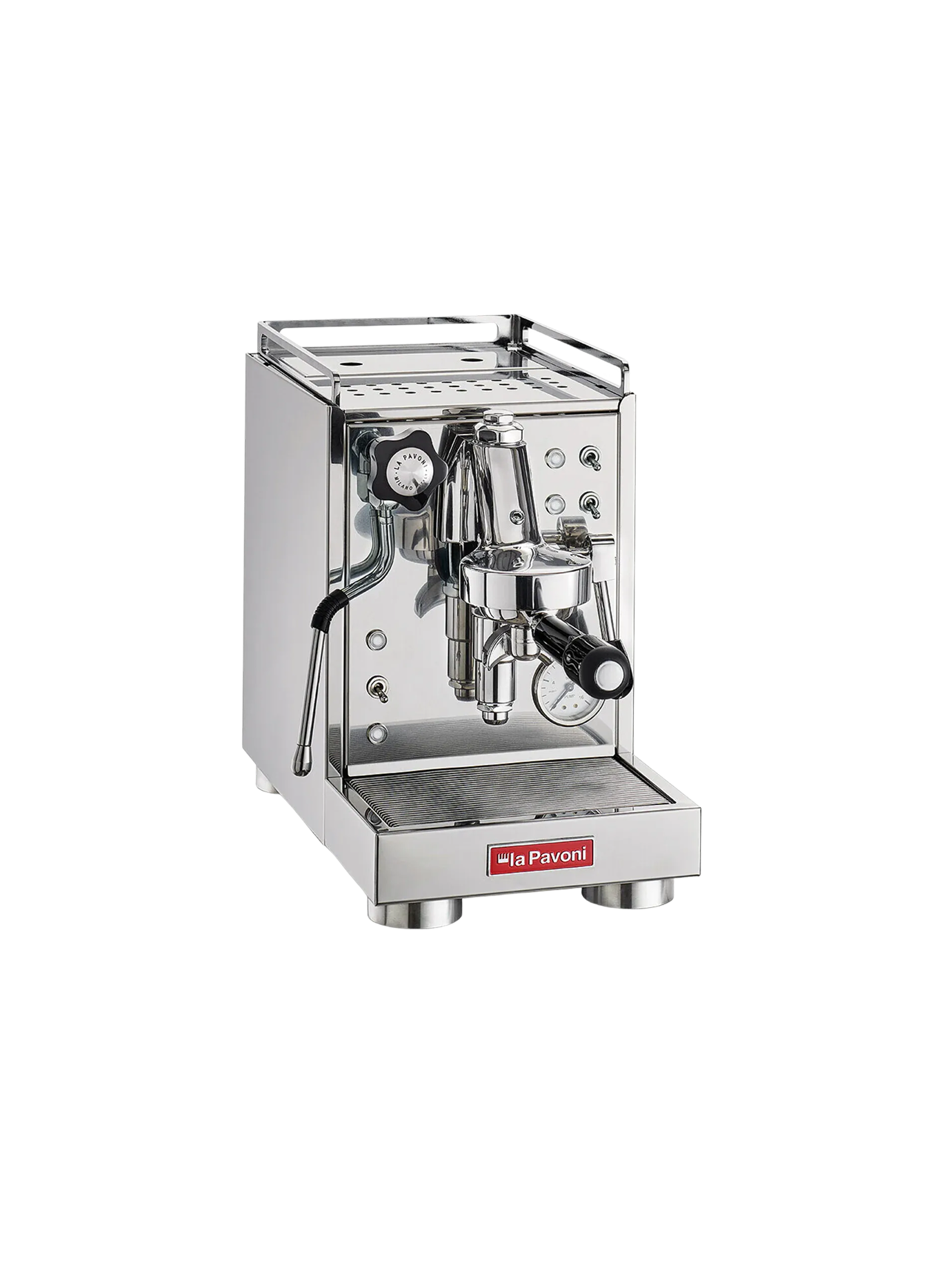
La Pavoni Mini Cellini is a compact, stainless-steel espresso machine built for mechanical precision and long-term durability. It delivers barista-level espresso at home through a classic E61 group and a robust single-boiler architecture.
01 La Pavoni Mini Cellini: Key Features & Core Strengths (E61 Espresso Machine)
-
E61 head for pre-infusion and thermal mass
-
Stainless steel for long-term durability
-
Vibratory pump 9-bar extraction pressure
-
Compact single-boiler format for home baristas
02 TL ; DRWhat the La Pavoni Mini Cellini Is Really Built For
The Mini Cellini is, above all, a compact E61 espresso machine built for users who value mechanical stability, long-term durability, and hands-on control. It offers the essential elements of a professional setup — thermal mass, consistent pressure, a stainless-steel frame — in a simplified single-boiler format that fits on a home counter. What matters most here is not automation but reliability: a predictable tool that preserves the fundamentals of traditional espresso making while remaining accessible to serious beginners and experienced home baristas alike. In one sentence, this machine is a long-lasting, mechanical platform for real espresso craft.
03 La Pavoni Mini Cellini: Why It Delivers True Barista-Level Espresso at HomeOur review.
Great espresso isn’t about gadgets or presets — it’s about control. Temperature stability, pressure consistency, grind precision, and repeatability. Most consumer machines rely on automation to hide their limitations: plastic internals, inconsistent heat, and imprecise pressure curves. They simplify the experience, but they quietly lower the ceiling of what’s possible in the cup.
The La Pavoni Mini Cellini breaks away from this pattern. Built around the iconic E61 group head, it brings genuine thermal mass, mechanical pre-infusion, and stable extraction pressure into a compact home format. Its single stainless-steel boiler requires the user to manage brewing and steaming intentionally — a workflow much closer to professional practice than the push-button logic of consumer appliances.
Its stainless-steel body isn’t just aesthetic. It’s a long-lifespan chassis engineered for durability, serviceability, and mechanical reliability. No fragile touchscreens. No disposable components. Every part serves a purpose — stability, longevity, control — and every upgrade in your workflow (grinder, water, beans, technique) is immediately reflected in the cup. This is a machine that scales with you: the more precise you become, the more it gives back.
What stands out most during real use is how honest the machine feels. There’s no artificial smoothing of your mistakes — if your distribution is sloppy, you see it; if your grind is off, the Mini Cellini will tell you. But when everything aligns — fresh beans, correct dose, proper tamp, stable boiler — the machine produces remarkably consistent shots for its category. The E61 group provides a gentle, predictable pre-infusion, and the pressure curve is steady enough to highlight clarity, sweetness, and density in the espresso. It’s surprisingly capable of producing café-level extractions once dialed in.
Another aspect we genuinely appreciated is the mechanical feedback. The slight hum of the vibratory pump, the heat radiating from the E61, the visible boiler cycle through the indicator light — all these cues help you read the machine over time. After a week, you intuitively know when it’s ready, when it’s too hot, and when it needs a small flush. This transparency helps users become better baristas.
For milk drinks, the experience is slower but very controlled. The cool-touch wand doesn’t have the explosive power of an HX or dual-boiler, but its steam is dry, consistent, and predictable. It encourages good technique: positioning the tip correctly, rolling the milk gently, building microfoam gradually. The result is clean-textured milk with a fine, glossy microfoam ideal for cappuccinos or flat whites.
In daily use, the Mini Cellini feels more like a compact professional tool than a consumer appliance. It rewards patience, routine, and consistency. Its limitations — single-boiler workflow, no PID — are not flaws but part of its character. They require the user to understand heat management, extraction timing, and the natural rhythm of a traditional machine. And it’s precisely this rhythm that makes the Mini Cellini enjoyable: it invites you to slow down, to pay attention, to participate.
In a market obsessed with convenience, the Mini Cellini brings espresso back to a discipline — something you learn, refine, and master. It doesn’t automate skill away. It rewards it.
For anyone serious about long-term espresso quality and a daily ritual grounded in precision, the La Pavoni Mini Cellini remains one of the most honest, durable, and mechanically transparent machines available for the home.
04
Inside the La Pavoni Mini Cellini: E61 Group, Boiler & Internal Architecture Explained
Features & Benefits
Before examining its components individually, it’s important to understand what the Mini Cellini represents as a mechanical system. Unlike lightweight consumer machines that mask instability with electronics, the Mini Cellini is deliberately simple: an E61 group, a stainless-steel single boiler, a vibratory pump, and a rigid full-metal chassis. Its goal is stability — thermal inertia, predictable pressure behavior, and a hydraulic circuit the user can learn to read. The boiler cycles heat into the group, the pump delivers regulated extraction pressure, and the steel frame absorbs vibration to preserve internal geometry. Every part is designed to stabilize, regulate, or transfer energy cleanly. The result is a home machine that behaves like a stripped-down professional instrument: consistent, predictable, and fully responsive to your technique.
E61 Thermosiphon Group
The E61 group is a heavy chrome-plated brass assembly heated through natural thermosiphon circulation. Water cycles between the boiler and the group, maintaining stable brew temperature and enabling mechanical pre-infusion as low-pressure water gently saturates the coffee bed before full pressure is applied.
Single Stainless-Steel Boiler (0.8 L)
A 0.8-liter stainless-steel boiler offers fast warm-up, predictable thermal behavior, and corrosion resistance. As a true single-boiler machine, brewing and steaming are alternated manually — a simple, reliable architecture that encourages the user to understand the thermal cycle and time extractions accordingly.
Vibratory Pump (15-bar Max, ~9-bar Brew)
The vibratory pump provides a gradual pressure ramp that reduces puck shock and improves extraction uniformity. Although capable of 15-bar peak pressure, the hydraulic circuit regulates real espresso extraction to approximately 9 bars. Its sound and vibration offer immediate feedback on system behavior.
2.9 L Removable Water Tank
The large 2.9-liter tank offers generous autonomy and is completely removable for easy refilling and cleaning. An integrated empty-tank alarm protects the pump by preventing operation without water, ensuring consistent hydraulic performance.
Cool-Touch Steam & Hot Water Wand
The cool-touch stainless-steel wand stays safe to handle while delivering sufficient steam pressure for microfoam. It also provides hot water for americanos and cleaning cycles, offering versatility despite the machine’s single-boiler workflow.
Boiler Pressure Gauge & Heating Indicator
A dedicated boiler manometer provides real-time visibility into internal pressure — essential for timing extractions and steam readiness. Paired with the heating indicator light, it allows the user to monitor and predict the machine’s thermal cycle accurately.
Stainless-Steel Body
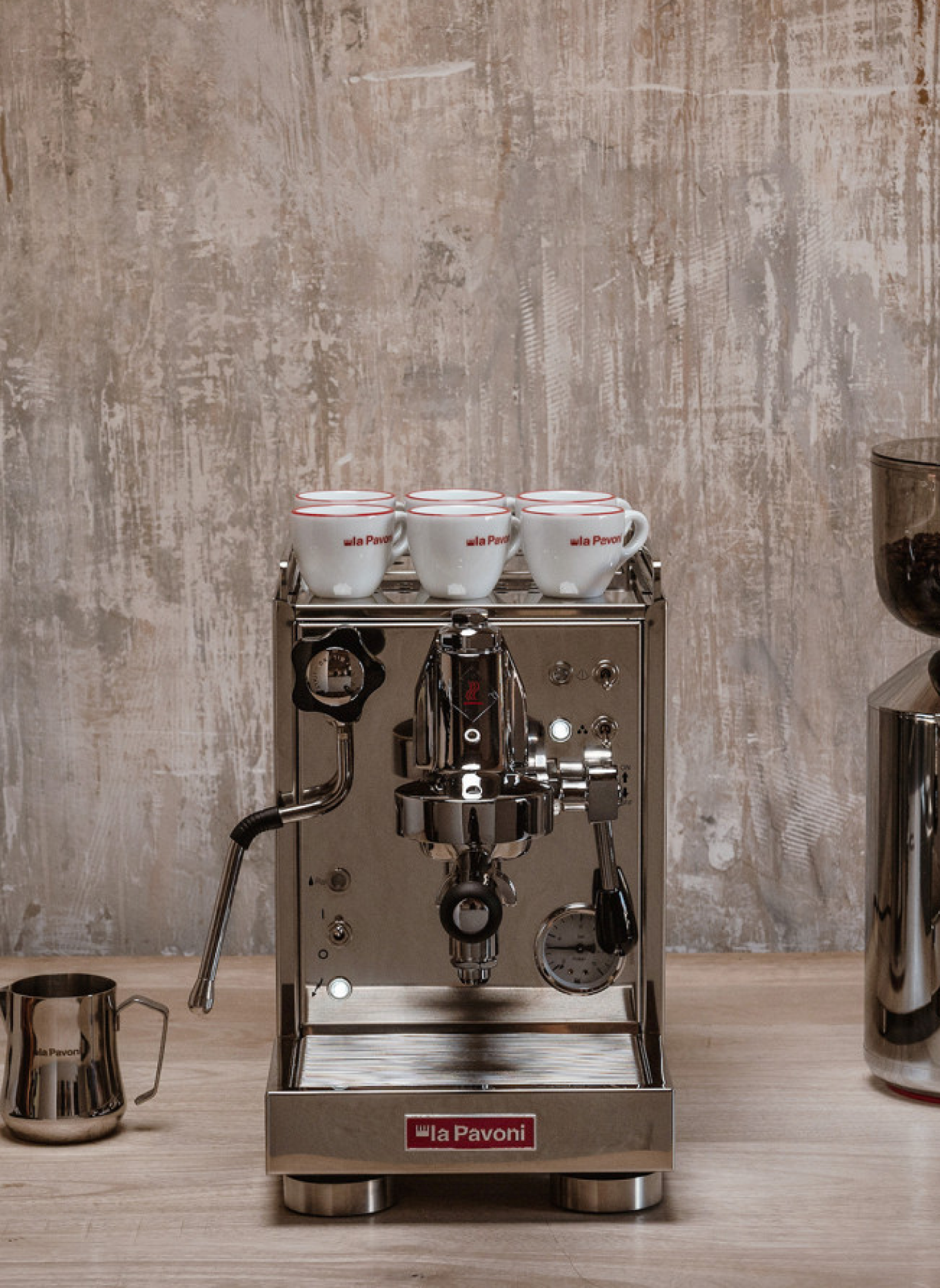
The polished stainless-steel chassis provides structural rigidity, vibration damping, and long-term corrosion resistance. Its mass stabilizes the machine during brewing, improving extraction consistency and extending overall lifespan.
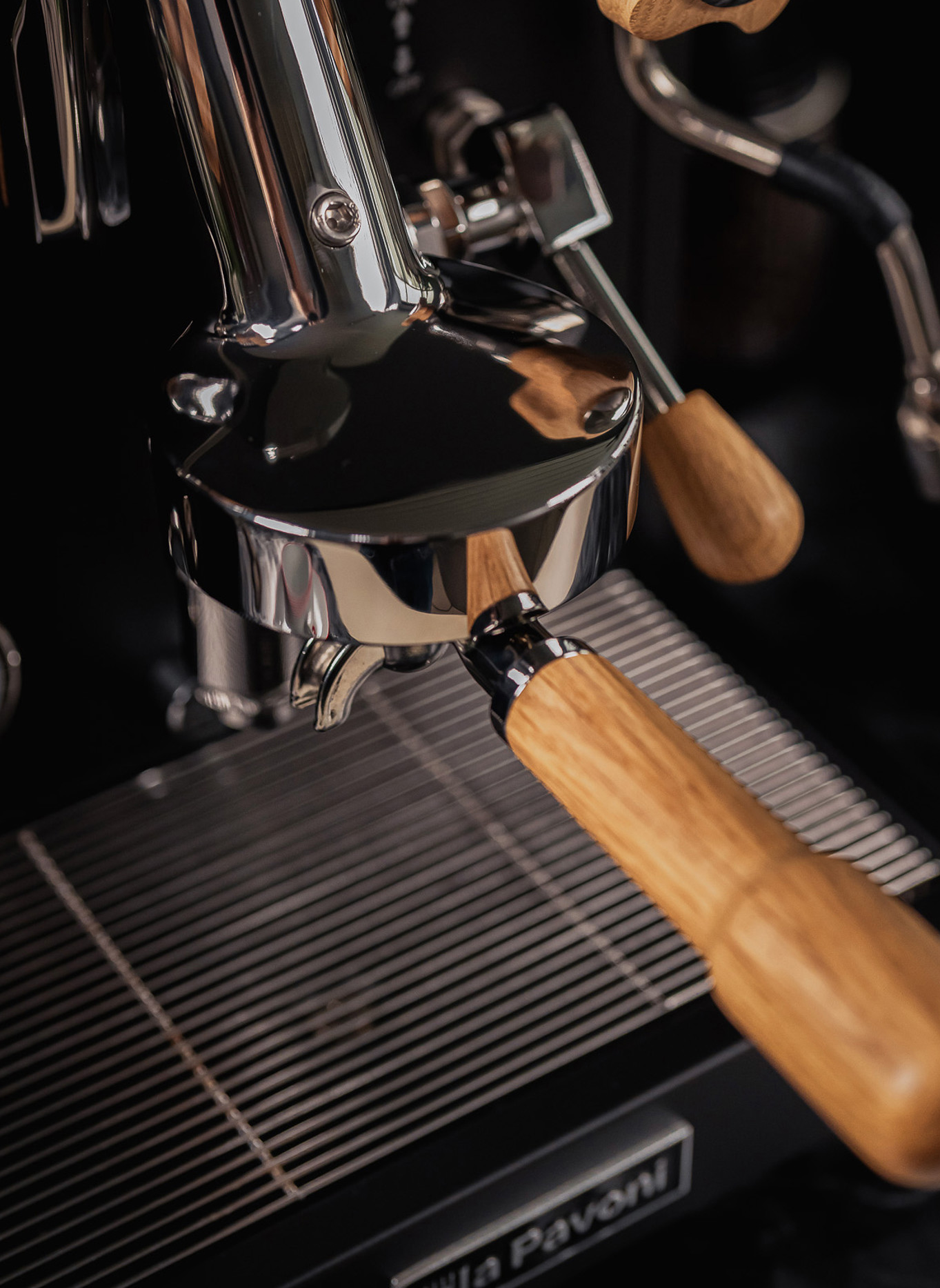
58 mm Double-Spout Portafilter
The professional 58 mm portafilter ensures compatibility with industry-standard baskets, tampers, and precision accessories. It allows users to upgrade their workflow progressively without changing equipment.
Passive Cup Warmer
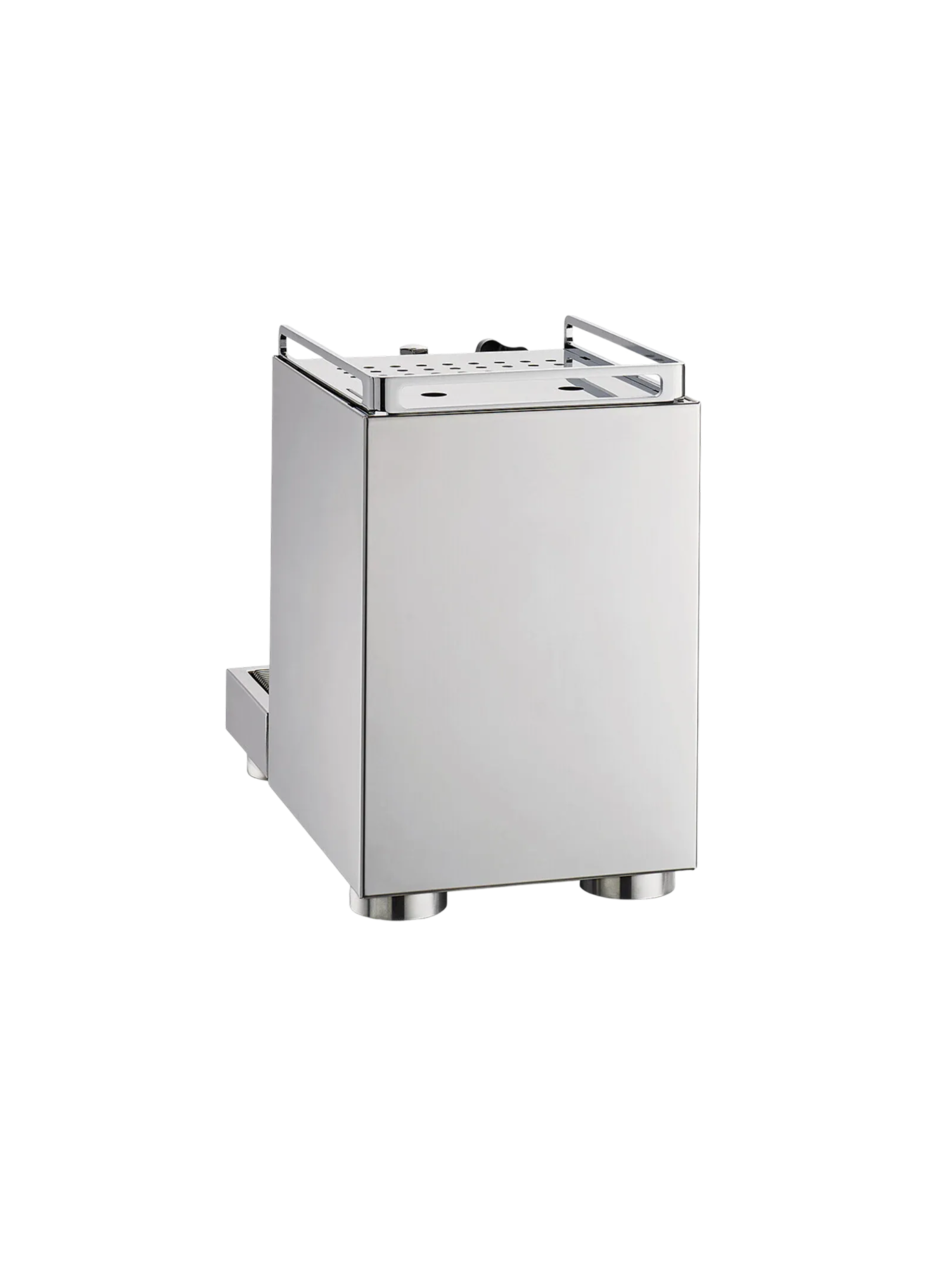
The top panel acts as a passive cup warmer, harnessing heat from the boiler and group to preheat cups. This helps preserve beverage temperature and crema integrity.
Dimensions & Weight
At 370 x 240 x 420 mm and 18 kg, the Mini Cellini achieves a compact footprint while maintaining enough mass to stay stable during extraction. Its solid construction minimizes vibration and preserves mechanical performance over time.
05 Real-World Performance: Daily Use, Back-to-Back Shots & Milk Steaming
Disciplined Daily Use
The Mini Cellini requires about 15 minutes to reach functional stability, as the E61 group must absorb enough heat from the single boiler to ensure consistent extractions. Once the system is warmed, the thermosiphon maintains a reasonably stable brew temperature, giving the user predictable performance from shot to shot. For someone who wants a steady morning ritual — repeatable taste, reliable texture, and a mechanical workflow — the machine offers a disciplined, dependable routine without electronic intervention.
Back-to-Back Shots (Single Boiler Behavior)
Unlike HX or dual-boiler machines, the Mini Cellini cannot steam and brew at the same time. It is a traditional single-boiler workflow: you brew first, then activate steam mode, then cool the boiler back down for brewing again. For multiple espresso shots in a row, the machine stays relatively stable as long as steaming is not involved — the E61 group provides enough thermal mass to smooth out fluctuations. In a home or small-gathering context, it performs consistently, but users must respect the heating cycle and avoid rushing temperature transitions.
Cappuccinos and Lattes
Steam production comes from the same 0.8 L boiler, switched into steam mode. While it does not match the power of an HX or dual-boiler machine, the cool-touch stainless wand provides adequate steam for creating proper microfoam. Milk texturing is controlled, slower than a café machine, but fully capable of producing velvety milk for cappuccinos or flat whites. The experience is deliberate rather than fast — ideal for users who enjoy learning technique.
Technical Progression & Skill Development
Because the Mini Cellini is fully mechanical and non-automated, every barista variable is visible in the cup: grind setting, distribution, tamping pressure, brew ratio, temperature awareness, and boiler cycle timing. Nothing is hidden or compensated electronically. This transparency makes the Mini Cellini an excellent training platform — it rewards precision and discipline. For anyone who wants to understand extraction mechanics rather than automate them away, the machine becomes a long-term learning tool.
06
La Pavoni Mini Cellini vs Other Espresso Machines (Silvia, Mara X, Classika, Cellini HX)
Comparisons
Mini Cellini vs La Pavoni Cellini Classic (HX Model)
Both machines share La Pavoni’s iconic E61 group, but operate on fundamentally different architectures. The Mini Cellini is a compact single-boiler machine with a 0.8 L stainless-steel boiler, requiring brew/steam alternation and offering a simpler, more serviceable design. The Cellini Classic uses a larger ~1.8 L copper/brass heat-exchanger boiler, enabling simultaneous brewing and steaming, faster thermal recovery, and stronger steam performance. The Mini is smaller and mechanically purist, while the Classic behaves more like a café-style machine. Verdict: Mini Cellini for compact simplicity and mechanical purity; Cellini Classic for workflow speed and steam power.
Mini Cellini vs Bezzera Unica PID
The Bezzera Unica is one of the closest true competitors: both are E61 single-boiler machines. The Unica includes a PID for precise temperature control, giving it tighter brew stability than the Mini Cellini’s thermostat-based system. However, the Mini Cellini offers a more robust stainless-steel chassis and a simpler mechanical build that is easier to maintain long-term. Verdict: Unica for PID precision; Mini Cellini for durability and mechanical straightforwardness.
Mini Cellini vs Lelit Mara X
The Lelit Mara X uses a temperature-managed HX system with PID logic that stabilizes the thermosiphon, making it extremely beginner-friendly. Brewing and steaming are simultaneous, and steam pressure is stronger. The Mini Cellini requires more temperature awareness but offers a cleaner, more transparent mechanical workflow with fewer electronic points of failure. Verdict: Mara X for convenience and performance; Mini Cellini for ritual, longevity, and mechanical clarity.
Mini Cellini vs ECM Classika PID
The ECM Classika is a premium single-boiler E61 machine with a refined build and PID temperature control. It provides tighter thermal management and more polished ergonomics, but at a significantly higher price. The Mini Cellini offers comparable foundational performance with simpler internals and a more accessible price point. Verdict: Classika for precision-focused baristas; Mini Cellini for value and ease of maintenance.
Mini Cellini vs Rancilio Silvia
The Silvia is a classic entry-level single boiler with a smaller, lighter group that suffers more temperature drift. The Mini Cellini’s E61 group provides superior thermal mass, smoother pressure ramp, and more consistent extraction quality. The Silvia is budget-focused; the Mini Cellini is a first real espresso machine’ for serious home baristas. Verdict: Silvia for limited budgets; Mini Cellini for a true E61 upgrade path.
07 Pros of the La Pavoni Mini Cellini: Why Choose an E61 Espresso Machine
and natural mechanical pre-infusion
rigid, and fully serviceable
all professional accessories
minimal fragile electronics
of producing proper microfoam
excellent long-term maintainability
08 Cons & Limitations: What You Must Know Before Buying the Mini Cellini
switching between brew and steam
thermoblock systems
than rotary pumps
HX or dual-boiler machines
09 Should You Buy the La Pavoni Mini Cellini? Who Is It Really For
The Mini Cellini is made for users who treat espresso as a craft, not a convenience feature. If you want a machine that rewards technique, teaches temperature awareness, and provides a long-term mechanical experience, it is an excellent choice. It is not built for speed or automation — it is a traditional espresso instrument designed for disciplined daily use. With a good grinder, proper water, and consistent workflow, the Mini Cellini offers durability, serviceability, and true barista-style quality at home.
10 La Pavoni Mini Cellini Technical Specifications (Full Data Sheet)
(15 bar max, ~9 bar extraction pressure)
11 La Pavoni Mini Cellini FAQ: Warm-Up Time, Grinder, Cleaning, Noise & Maintenance
How long does the La Pavoni Mini Cellini take to heat up?
The boiler reaches operational temperature in around 5–7 minutes, but the E61 group requires 15–20 minutes for full thermal saturation. For consistent espresso quality, rely on the full warm-up time.
What grinder should I pair with the Mini Cellini?
A precise espresso grinder is mandatory. Stepless adjustment, quality burrs, and good particle uniformity are essential. Recommended: Eureka Mignon, Mazzer Mini, DF64, Niche Zero.
Do I need external accessories to use the Mini Cellini properly?
Yes. A precision grinder, 58 mm tamper, WDT or distribution tool, espresso scale, and low-mineral water are strongly recommended for consistent results.
Is the Mini Cellini good for milk drinks?
Yes. Steam is slower than HX or dual-boiler machines, but the wand produces dry, consistent steam capable of making proper microfoam for cappuccinos and flat whites.
Can I make several espressos in a row?
Yes. As long as steaming is not involved, the E61 group provides enough thermal mass to maintain stable back-to-back extractions.
Is the Mini Cellini noisy?
It uses a vibratory pump, which is naturally louder than rotary pumps. The sound is normal and provides mechanical feedback during extraction.
What water should I use with the Mini Cellini?
Use soft or low-mineral water (40–70 ppm hardness, pH ~7). Avoid high-mineral bottled water as it promotes scale and reduces boiler longevity.
Is the Mini Cellini difficult to maintain?
Not at all. Weekly backflushing, daily wand cleaning, yearly gasket replacement, and occasional descaling keep the machine in excellent condition.
Is the Mini Cellini suitable for beginners?
Yes — if the beginner wants to learn real espresso technique. The machine is stable, transparent, and teaches core barista skills effectively.
Do I need to flush the group before each shot?
Yes. A short cooling or warming flush brings the E61 group to the correct brewing temperature and ensures consistent results.
Can I leave the Mini Cellini on all day?
Technically yes, but for home use it’s better to turn it off after each session to prolong the lifespan of seals, gaskets, and internal components.
How long does the Mini Cellini last?
With proper maintenance and good water, the Mini Cellini can easily last 10–15+ years. Most parts are serviceable and readily replaceable.
10/10


Thermal
Stability
05/10
Extraction
Control
03/10
Pressure
Consistency
08/10
Build Quality
& Materials
{{for-who-title-right}}
Find where to buy Coldcard Q
Apply to become a reseller

Coldcard Q Manufacturer
Founded in 2012, Coinkite is one of the oldest and most respected Bitcoin hardware companies — and one of the very few that never compromised its principles. Based in Canada, the team led by NVK (Rodolfo Novak) has spent more than a decade building tools for sovereignty, not adoption.